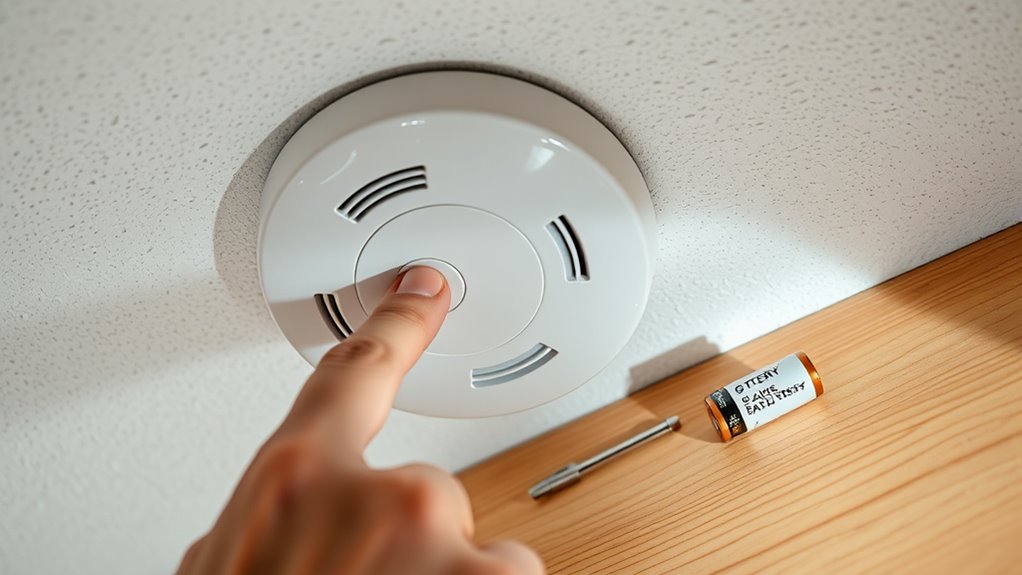

To test your smoke alarm, press and hold the test button until you hear a loud, piercing sound—this confirms it’s functioning properly. For regular checks, do this monthly. Make sure to clean the device of dust or insects that can interfere with it, and check if the mounting is secure. Battery types vary: long-life lithium batteries last up to ten years, while 9-volt or AA batteries need regular replacement. Keep everything in good shape, and you’ll be ready for anything—more tips can help guarantee your safety.
Key Takeaways
- Press and hold the test button on the smoke alarm for a few seconds to ensure it sounds loudly.
- Regularly inspect and clean the alarm to remove dust, dirt, or insects that may interfere with operation.
- Replace standard 9-volt or AA batteries immediately if the alarm chirps or sounds weaken during testing.
- Use long-life lithium batteries, which last up to ten years, and verify the alarm’s response during monthly tests.
- Confirm the alarm’s mounting is secure and unobstructed to ensure proper functioning during testing.

Have you ever wondered if your smoke alarm is working properly? It’s a question many of us overlook until it’s too late. Making sure your smoke alarm functions correctly is a key part of fire safety, and regular testing is essential for alarm maintenance. Taking a few minutes each month to verify that your device is alerting properly can make all the difference in an emergency. The good news is that testing your smoke alarm is straightforward and doesn’t require special tools—just your time and a little bit of attention.
Regularly test your smoke alarm monthly to ensure it’s working and keep your home safe.
First, locate your smoke alarm and find the test button. Most alarms have a clearly marked button right on the front or side. Press and hold this button for a few seconds. If your alarm is working, it should produce a loud, piercing sound almost immediately. This sound confirms that the alarm’s circuitry and speaker are functioning correctly. If you don’t hear anything, don’t ignore it. Instead, move on to alarm maintenance by inspecting the device for dust, dirt, or insects that could interfere with its sensors or sound. Cleaning your smoke alarm with a soft brush or vacuum can often resolve issues caused by debris.
It’s important to note that smoke alarms operate on different types of batteries, and knowing which you use helps in alarm maintenance. Many alarms have long-life lithium batteries that last up to ten years, and these usually don’t need frequent battery changes—just an occasional test to ensure they’re still working. Others rely on standard 9-volt or AA batteries, which require regular replacement. When testing, pay attention to the battery status—if the alarm emits a chirping sound or if the test button produces a weak or no sound, it’s time to replace the batteries. Always replace batteries with new ones of the same type, and do so promptly to keep your fire safety measures effective.
Performing this simple monthly check not only keeps your alarm in top condition but also reinforces good alarm maintenance habits. Remember, a functioning smoke alarm can buy you precious extra seconds in a fire emergency, giving you time to evacuate or alert others. It’s a small effort that pays off considerably in protecting your home and loved ones. So, set a reminder, test your alarm regularly, and stay vigilant. Fire safety isn’t just about having alarms—it’s about keeping them reliable and ready to alert you when it counts most. Regular testing is also recommended by fire safety experts, emphasizing the importance of routine checks to maintain alarm effectiveness.
Frequently Asked Questions
How Often Should I Replace My Smoke Alarm?
I recommend replacing your smoke alarm every 8-10 years to guarantee the best fire prevention and stay in line with safety regulations. Regularly testing the alarm and changing batteries can extend its life but don’t delay replacement when it reaches the end of its lifespan. Staying proactive about smoke alarm maintenance helps protect your home and loved ones, making safety a top priority.
What Are the Best Types of Batteries for Smoke Alarms?
Choosing the right batteries for my smoke alarm is like picking a reliable partner; I want long-lasting and dependable. I prefer lithium batteries because they offer excellent battery longevity and help maintain alarm sensitivity over time. These batteries last about 10 years, reducing the hassle of frequent replacements. Plus, they’re dependable in emergencies, ensuring my smoke alarm works when I need it most.
Can I Test My Smoke Alarm With Household Objects?
You shouldn’t rely on household object testing for your DIY smoke alarm. Using household objects to test the alarm isn’t effective and can be unsafe. Instead, press the test button on your smoke detector to ensure it sounds properly. If you want a more thorough check, use a smoke test aerosol designed for smoke alarms. This method is safer and more reliable than household object testing.
Are Interconnected Smoke Alarms More Effective?
Interconnected smoke alarms are definitely more effective because they work together through alarm synchronization. When one alarm detects smoke, all alarms sound off, alerting everyone in the house immediately. This system provides a quicker warning, especially if you’re in a different room or asleep. I highly recommend installing interconnected systems to guarantee maximum safety. Regular testing keeps alarm synchronization reliable, giving you peace of mind during emergencies.
What Should I Do if My Smoke Alarm Malfunctions?
Did you know that smoke alarms malfunction in about 10% of households? If yours does, I recommend first troubleshooting steps like checking the battery, cleaning the alarm, and ensuring it’s properly connected. If these don’t work, replace the alarm immediately. Never ignore alarm malfunctions—faulty alarms can’t alert you during a fire, risking safety. Always follow manufacturer instructions and consider a professional inspection if issues persist.
Conclusion
Remember, testing your smoke alarm each month is like checking your loyal old dog’s heartbeat—an act of love and care. Don’t forget to replace batteries with the right type, ensuring it’s always ready to protect your loved ones. As I once read in a vintage safety manual, “A stitch in time saves nine,” and that couldn’t be truer today. Stay vigilant, keep your alarms in check, and cherish every moment of safety at home.