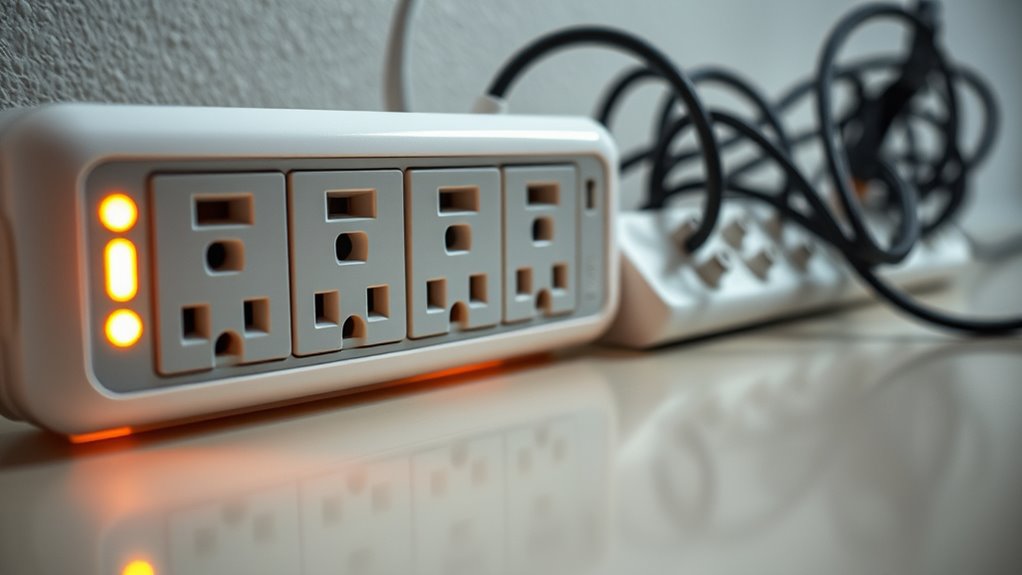

I want to help you understand the safety differences between surge protectors and power strips. Power strips mainly give you more outlets but don’t guard against voltage spikes, while surge protectors are designed to absorb sudden surges, protecting your electronics. Overloading either device can cause hazards like fires. Knowing which one to use for different devices is key to staying safe, and there’s more to learn about their features and proper usage.
Key Takeaways
- Surge protectors absorb voltage spikes, providing safety for sensitive electronics; power strips do not offer surge protection.
- Overloading a power strip or surge protector can cause overheating and fire hazards; proper capacity ratings must be respected.
- Surge protectors have Joule ratings indicating how much energy they can absorb before failing, enhancing safety.
- Power strips mainly expand outlets and lack built-in safety features, increasing fire risk if overloaded.
- For safety, use surge protectors with sensitive electronics and power strips for less critical devices within their rated limits.
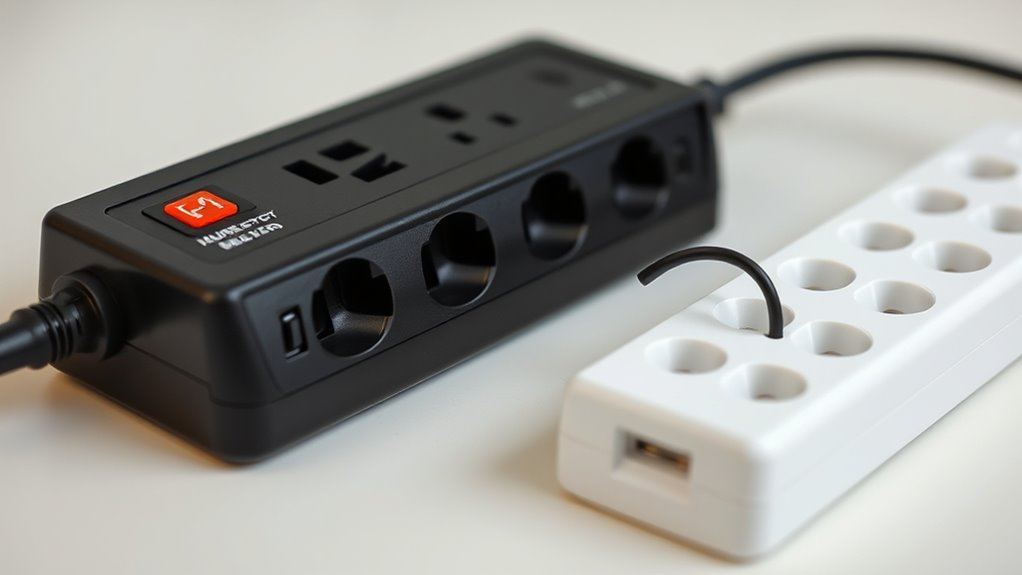
When choosing between a surge protector and a power strip, it’s important to understand their differences because they serve different purposes. As someone who’s invested in keeping my electronics safe, I’ve learned that understanding electrical safety and power capacity is key to making the right choice. A power strip simply provides extra outlets, allowing me to plug in multiple devices in one location. It’s convenient, but it doesn’t do much beyond that. If I overload it or connect sensitive electronics without protection, I risk damaging my devices or causing a fire hazard. That’s why I’ve come to see that a power strip’s main concern is convenience, not safety.
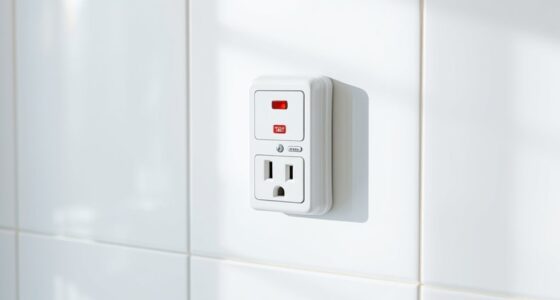
On the other hand, a surge protector is designed with safety in mind. It has built-in components that absorb excess electrical energy caused by power surges, which can happen during storms or voltage fluctuations. This added layer of electrical safety helps protect my valuable electronics from sudden voltage spikes. However, surge protectors have limitations on their power capacity. If I connect too many high-wattage devices, I might overload it, reducing its effectiveness or damaging its internal components. It’s essential to check the surge protector’s Joule rating and maximum current capacity to guarantee it can handle my setup. Recognizing the difference in purpose between these devices is crucial for proper usage.
Understanding the difference in power capacity is also vital. Power strips often have a maximum wattage rating, which I need to respect to avoid overloading. Exceeding this limit can cause overheating or even a fire. Surge protectors, meanwhile, specify their maximum surge capacity, often measured in Joules, which indicates how much energy they can absorb before failing. I’ve learned that choosing a surge protector with a higher Joule rating provides better protection for my sensitive electronics over time.
Electrical safety is my top priority. I avoid plugging everything into one outlet or overloading any device. Instead, I use a surge protector for my computer, TV, and other sensitive equipment, knowing it offers protection against power surges. For less critical devices like lamps or chargers, a basic power strip suffices, provided I don’t overload it. By understanding the distinctions in purpose, electrical safety, and power capacity, I’m better equipped to protect my home and electronics. Making informed choices means I can enjoy the convenience of extra outlets without compromising safety.
Frequently Asked Questions
Can I Use a Power Strip as a Surge Protector?
You shouldn’t use a power strip as a surge protector because it doesn’t provide the same level of electrical safety and appliance protection. Power strips mainly extend outlets but lack surge suppression features. Relying on them can expose your devices to power surges, risking damage. For proper electrical safety and ideal appliance protection, invest in a dedicated surge protector that safeguards your devices from voltage spikes effectively.
What Is the Lifespan of a Typical Surge Protector?
They say “an ounce of prevention is worth a pound of cure,” and that’s true for surge protectors. Typically, a surge protector’s durability lasts about 3 to 5 years, depending on usage and surge events. After that, power strip longevity diminishes, and it’s best to replace them to guarantee safety. Regularly checking your surge protector helps keep your devices protected and maintains ideal safety.
Are There Any Safety Standards for Surge Protectors?
Yes, there are safety standards for surge protectors. I look for models with UL safety certifications, which guarantee they meet strict safety requirements. UL standards verify that the device can handle power surges safely and won’t pose fire risks. Always choose surge protectors with recognized safety certifications to protect your devices and your home, giving you peace of mind.
Can Surge Protectors Be Used Outdoors Safely?
Yes, surge protectors can be used outdoors, but only if they’re specifically designed for outdoor durability and weather resistance. I always look for surge protectors labeled as outdoor-rated because they handle moisture, rain, and temperature changes better. Using a regular indoor surge protector outside can be dangerous and cause electrical faults. So, make sure you select one built for outdoor use to guarantee safety and protection for your devices.
How Do I Tell if My Surge Protector Is Still Effective?
Ever wonder if your surge protector is still doing its job? Check its indicator lights—if they’re off or flickering, it’s time for maintenance or replacement. Regularly testing and inspecting your surge protector helps guarantee safety and performance. Keep an eye on any physical damage or worn-out cords, and remember, a dependable surge protector keeps your electronics safe from unexpected surges. Don’t wait—stay protected and proactive!
Conclusion
So, next time you’re plugging in your devices, have you really thought about what’s behind that simple strip? The difference between safety and risk can be as thin as a wire. Will you choose the basic power strip or invest in a surge protector that might just save your gadgets—and your peace of mind? The choice is yours, but one decision could make all the difference when it counts. Are you ready to make it?