
Static electricity at home happens when friction between materials causes electrons to transfer, creating an imbalance of charge. This buildup is worse with synthetic fibers, dry indoor air, and low humidity—common in winter. When you touch a grounded object, the static discharges, giving you that shocking jolt. To reduce shocks, increase humidity and wear natural fibers. Want to know more ways to prevent static shocks and stay safer? Keep exploring for useful tips.
Key Takeaways
- Static electricity occurs due to friction between synthetic fabrics and dry indoor air, causing charge buildup on the body.
- Shocks happen when static charges rapidly discharge upon touching grounded objects like doorknobs.
- Increasing indoor humidity with humidifiers reduces static buildup by preventing excessive charge accumulation.
- Wearing natural fibers such as cotton and avoiding synthetic clothing minimizes static electricity.
- Properly grounding electrical outlets and using grounding strips help safely dissipate static charges at home.
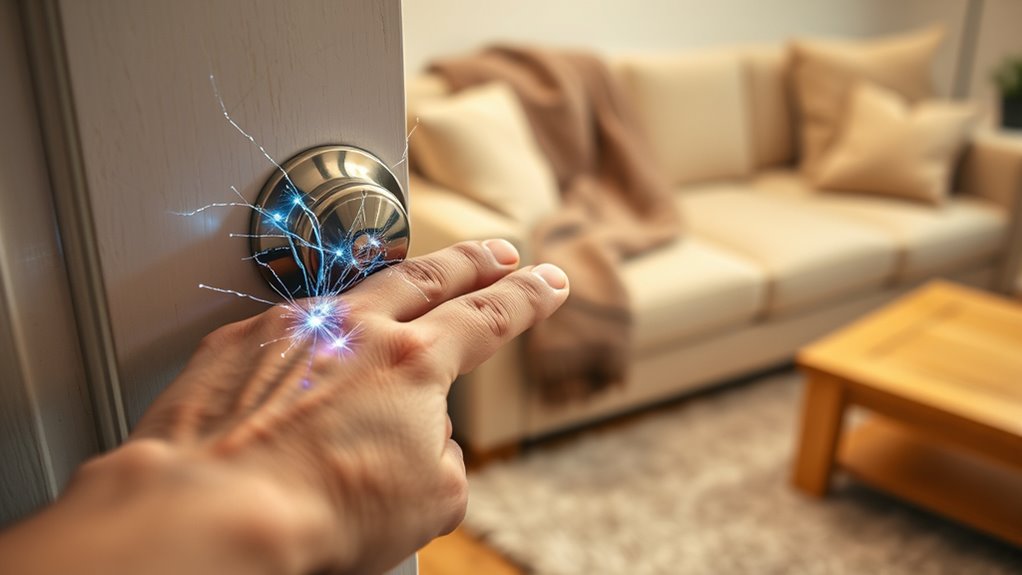
Have you ever experienced a shock after walking across the carpet or touching a doorknob? That sudden jolt is a classic sign of static electricity, which forms when there’s electrostatic buildup on your body. This buildup occurs when electrons are transferred between objects, often because of friction. For example, walking on a carpet made of synthetic fibers can cause you to accumulate extra electrons, leaving your body positively charged. When you touch something grounded, like a metal doorknob, those electrons rapidly discharge, giving you that unexpected shock. It’s a harmless but startling experience, and it’s all about how static electricity works in our homes.
Ever felt a shock after walking on a carpet? That’s static electricity discharging.
Electrostatic buildup isn’t just about touching doorknobs; it can happen anytime there’s an imbalance of electrical charge between you and your surroundings. Synthetic fibers, dry air, and certain fabrics tend to increase static charge. During winter months, for instance, the air inside tends to be drier, which exacerbates static buildup because moisture helps conduct electricity and prevent charges from accumulating. This is where household grounding comes into play. Proper grounding provides a safe pathway for excess static electricity to dissipate, preventing those sudden shocks. For example, grounding mats or strips attached to your electrical system can help drain static buildup safely into the earth, reducing the likelihood of static shocks.
To minimize electrostatic buildup at home, you can start by increasing humidity levels. Using a humidifier adds moisture to the air, which helps prevent static charges from building up on your skin and clothes. Wearing natural fibers like cotton instead of synthetic materials also reduces static buildup because natural fibers don’t tend to hold static charges as much. Additionally, regularly touching a grounded metal object before doing other tasks can help discharge any static charge safely and prevent shocks. If your home has electrical outlets, installing grounding strips or ensuring your system is properly grounded makes a big difference. These measures help direct static charges away from you, making your environment safer and more comfortable.
In essence, static electricity at home is mostly about how electrostatic buildup occurs and how household grounding can help mitigate it. When your body accumulates too much static charge, touching a grounded object allows a quick discharge, which can be startling. By increasing humidity, choosing natural fabrics, and ensuring proper grounding, you can considerably reduce these shocks. It’s all about creating a balance—allowing excess charge to safely escape and preventing it from building up to uncomfortable levels. Maintaining proper grounding techniques and understanding static electricity can make your home a safer, more comfortable environment. So, next time you get a shock, remember it’s a sign your home’s static control could use a little boost.
Frequently Asked Questions
Can Static Electricity Damage Electronic Devices at Home?
Yes, static electricity can damage electronic devices at home through electrostatic discharge, which may cause static damage. I always make sure to ground myself before handling sensitive electronics, like computers or smartphones, to prevent static buildup. Using anti-static mats or wrist straps helps reduce the risk. Even small shocks can sometimes harm delicate components, so taking these precautions is essential to protect your devices from static-related damage.
Does Wearing Certain Fabrics Increase Static Shocks?
Wearing certain fabrics definitely increases static shocks. I’ve noticed that synthetic fabrics like polyester and nylon tend to generate more static electricity compared to natural fibers like cotton or wool. When I choose my clothing, I opt for natural fabrics because they’re less likely to cause those unexpected shocks. Your clothing choices really matter—lighter, natural fabrics help reduce static buildup and keep those shocks at bay.
Are There Natural Remedies to Prevent Static Buildup?
Yes, there are natural remedies for static prevention I recommend. I use a few simple tricks like rubbing a metal object on your skin before touching electronics, or adding a few drops of natural moisturizing oil to your skin to reduce static buildup. Wearing natural fibers like cotton helps, too. These natural remedies can effectively minimize static shocks without harsh chemicals, making your home more comfortable.
How Does Humidity Affect Static Electricity Indoors?
Higher humidity levels reduce static electricity indoors because increased indoor moisture helps keep our surfaces and air conductive. When humidity is low, static shocks become more common as dry air allows electrons to build up easily. I recommend using a humidifier or placing bowls of water around your home to boost indoor moisture. Maintaining ideal humidity levels, around 40-60%, minimizes static buildup and keeps shocks at bay.
Can Static Shocks Cause Fires or Other Hazards?
Static shocks rarely cause fires or major hazards, but they can pose a fire risk in certain situations, especially around flammable vapors or materials. I always prioritize household safety by avoiding static buildup near such hazards and grounding myself before touching sensitive equipment. Staying cautious helps prevent any potential sparks from igniting fires, ensuring my home remains a safe environment for everyone.
Conclusion
So, next time static shocks surprise you, remember it’s all about balance and grounding. Keep your skin moisturized, stay hydrated, and wear natural fibers—simple steps that make a difference. Use humidifiers, touch grounded objects, and stay aware of your environment. By staying mindful, reducing shocks, and embracing comfort, you’ll make your home a calmer, more static-free space. After all, understanding and prevention go hand in hand for a shock-free life at home.