To keep safe with space heaters, I always guarantee proper placement on flat, stable surfaces away from curtains or bedding, maintaining at least a three-foot clearance from furniture and vents. I avoid placing them on uneven surfaces or in high-traffic areas, and I never leave them unattended, especially when I leave the house. Regularly inspecting cords for damage and turning off heaters when not needed helps prevent hazards. Keep these tips in mind for safe comfort whenever you use a space heater. If you want to learn more, keep paying attention.
Key Takeaways
- Place space heaters on flat, stable surfaces away from curtains, bedding, and combustibles to prevent fire hazards.
- Maintain at least three feet of clearance from furniture, walls, and vents to ensure proper airflow and safety.
- Never leave space heaters unattended or plugged in when leaving the room or house.
- Regularly inspect cords for damage and avoid overloading extension cords rated for high wattage.
- Turn off and unplug heaters when not in use or when leaving the house to prevent overheating and accidents.

Space heaters can quickly make a chilly room cozy, but they also pose safety risks if not used properly. One of the most important safety considerations is managing the cord safety. I always guarantee that the power cord is out of reach of children and pets, and I avoid running it under rugs or furniture, which can cause overheating or tripping hazards. It might seem minor, but a frayed or damaged cord can lead to electrical fires, so I make it a habit to inspect the cord regularly and replace the heater if I notice any wear. When plugging in the heater, I prefer to use a grounded outlet and avoid overloading extension cords, which are not designed for high wattage appliances. If I must use an extension cord, I choose one rated for the heater’s power needs and keep it in good condition.
Another critical aspect is thermostat settings. I set the thermostat to a comfortable but safe temperature, usually around 68 to 70 degrees Fahrenheit. Keeping the heater on a proper setting prevents the room from overheating and reduces energy consumption. I avoid turning the thermostat up too high, which can cause the heater to run continuously and increase the risk of overheating. Adjusting the thermostat to a moderate setting also helps in managing the heater’s cycles, preventing unnecessary wear and tear. It’s tempting to crank up the heat when it’s cold, but I’ve learned that maintaining a consistent, moderate temperature is safer and more energy-efficient. Additionally, understanding celebrity lifestyle insights can help you better plan your space and safety measures to create a comfortable environment.
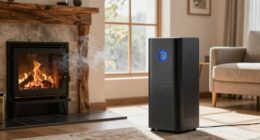
Placement of the space heater is equally crucial. I always place the heater on a flat, stable surface away from curtains, bedding, or any combustible materials. This prevents accidental fires and ensures proper airflow. I also keep it at least three feet away from furniture or anything that could block vents or cause heat buildup. I avoid placing heaters in high-traffic areas where they could be knocked over, especially when children or pets are around. Additionally, I never leave a space heater unattended for long periods or when I leave the house. Turning off the heater when not in use is a simple but effective safety step that many overlook.
Frequently Asked Questions
Can Space Heaters Be Used Outdoors Safely?
Yes, space heaters can be used outdoors safely if they have an outdoor safety feature and weatherproof design. I always look for heaters specifically made for outdoor use, as they’re built to handle moisture and weather conditions. Make sure to place them on stable, level surfaces, away from rain or snow, and follow the manufacturer’s safety instructions. Proper outdoor safety precautions guarantee you enjoy warmth without risking accidents.
Are There Specific Safety Certifications to Look For?
I always check for safety certifications when choosing a space heater, like the UL mark, which guarantees it meets strict safety standards. For example, I once saw a heater without proper certification cause a short circuit, highlighting the importance of manufacturer certifications. Always look for products that meet recognized safety standards—these certifications indicate the heater has been tested for fire risk and electrical safety, giving you peace of mind.
How Often Should I Inspect My Space Heater?
I recommend inspecting your space heater at least once a month. Follow a maintenance schedule that includes an inspection checklist: check for frayed cords, clean vents, and verify the thermostat works properly. Regular inspections help catch potential hazards early and keep your heater running efficiently. Don’t skip this step—staying vigilant can prevent accidents and prolong your heater’s lifespan, ensuring safe and reliable warmth all season long.
Can Space Heaters Cause Allergies or Respiratory Issues?
Think of a space heater as a silent visitor that can sometimes stir up allergenic concerns. Yes, they can cause allergies or respiratory issues if dust, pet dander, or mold particles circulate in the air. Poor maintenance or inadequate ventilation worsens these effects, impacting respiratory health. To stay safe, I recommend regular cleaning and ensuring proper ventilation to minimize these risks and keep your indoor air fresh and healthy.
What Should I Do if My Space Heater Tips Over?
If my space heater tips over, I immediately unplug it to prevent fire hazards. I verify it has tip-over prevention features and a safety shut-off system that automatically turns off the heater if it falls. I also position it on a flat, stable surface away from curtains or furniture. Regularly checking for damage and keeping the area clear helps me maintain safety and avoid accidents.
Conclusion
I once nearly lost a cozy evening to a small mistake with my space heater. That moment taught me how a simple oversight can turn a warm home into a hazardous one. Remember, safety isn’t just about avoiding accidents; it’s about protecting what matters most—your loved ones and your comfort. By following proper placement tips and staying vigilant, you can keep your space both warm and safe, turning your home into a true sanctuary.