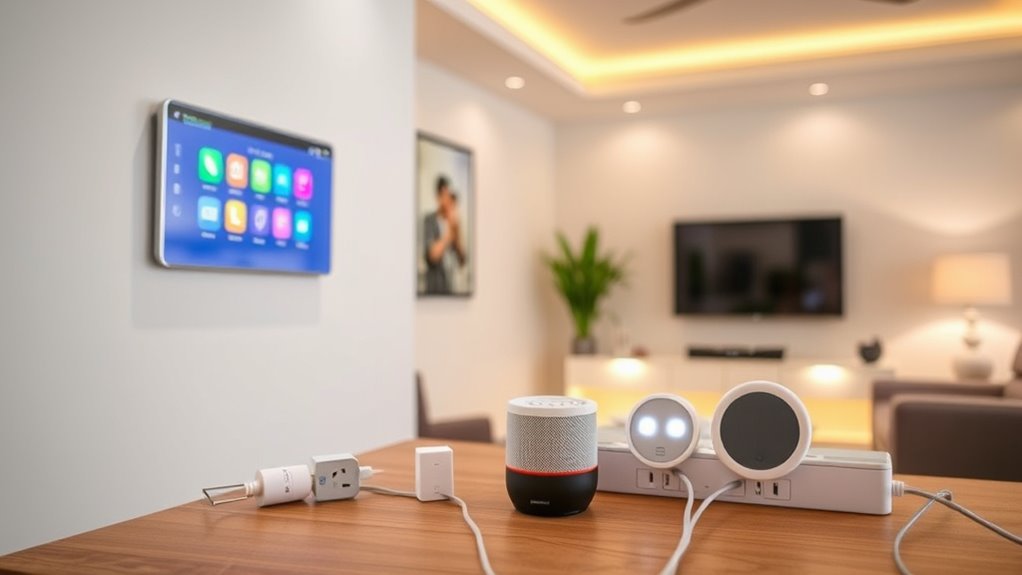

When setting up smart home devices, I always make sure to use surge protectors to guard against voltage spikes and prevent damage. I check device compatibility with my electrical system and follow installation instructions carefully. Regular inspections and timely updates keep everything running safely and smoothly. If you’re mindful of these safety measures, you can enjoy your smart home without worries—there’s more to contemplate for a truly secure setup.
Key Takeaways
- Always use surge protectors for smart devices to prevent damage from voltage spikes during storms or electrical issues.
- Verify device compatibility with your home’s electrical system and follow manufacturer installation instructions carefully.
- Regularly inspect connections and update device firmware to maintain safety and prevent electrical faults.
- Consult a professional electrician for complex installations and to ensure proper wiring and electrical capacity.
- Integrate safety features like surge protection and proper grounding to reduce risks of electrical hazards in your smart home.
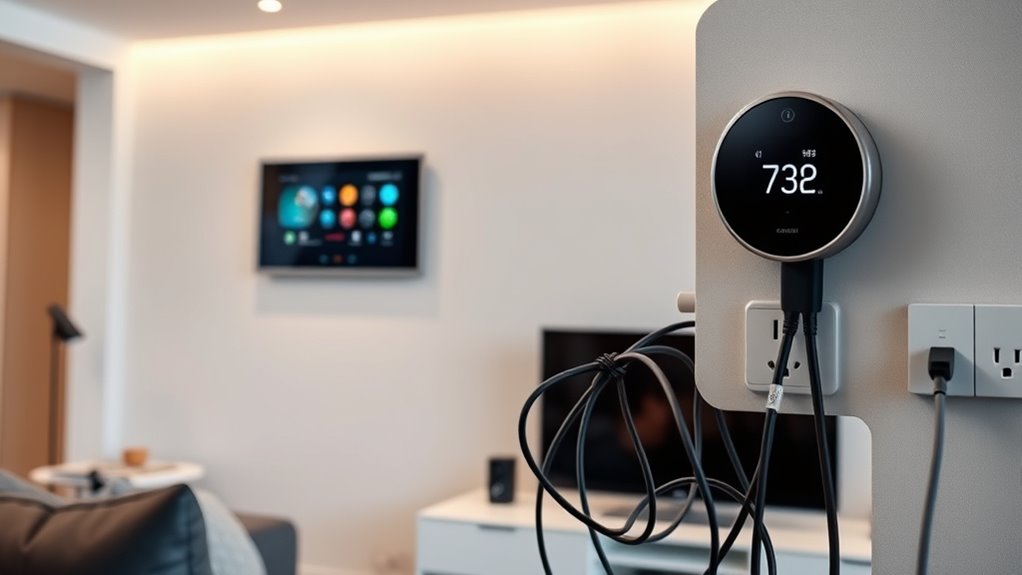
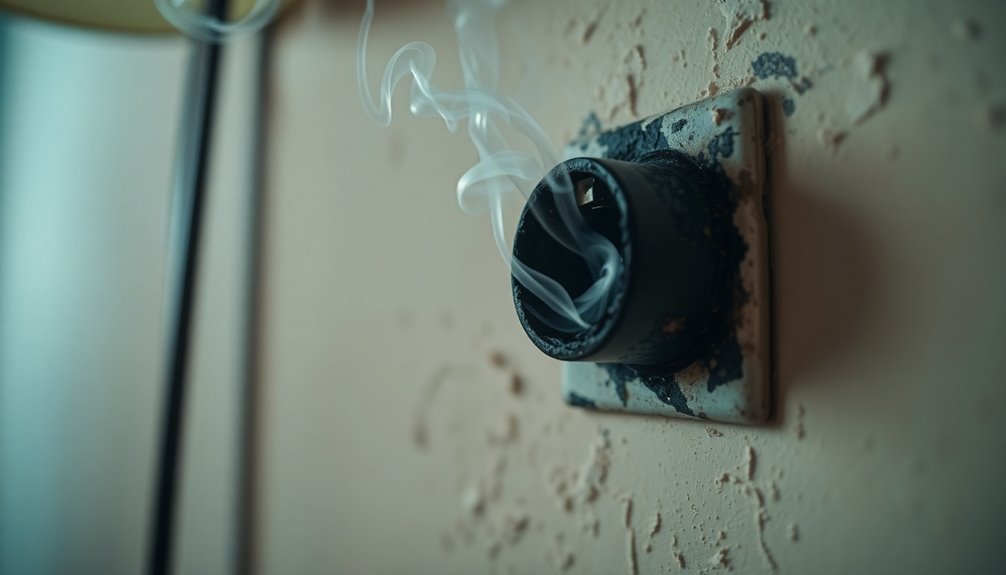
As smart home devices become increasingly popular, it is vital to understand how they impact electrical safety. These gadgets offer convenience and automation, but they also introduce new risks that homeowners need to be aware of. One key aspect is ensuring power surge prevention. Smart devices are often connected to sensitive electronics, and unexpected power surges can cause irreparable damage. Using surge protectors designed specifically for electronics is a simple yet effective way to shield your devices from sudden spikes in voltage. I always recommend plugging smart home gadgets into surge-protected outlets or power strips, especially during storms or when you’re aware of unstable electrical conditions. This small step can save you money and frustration in the long run by preventing costly repairs or replacements.
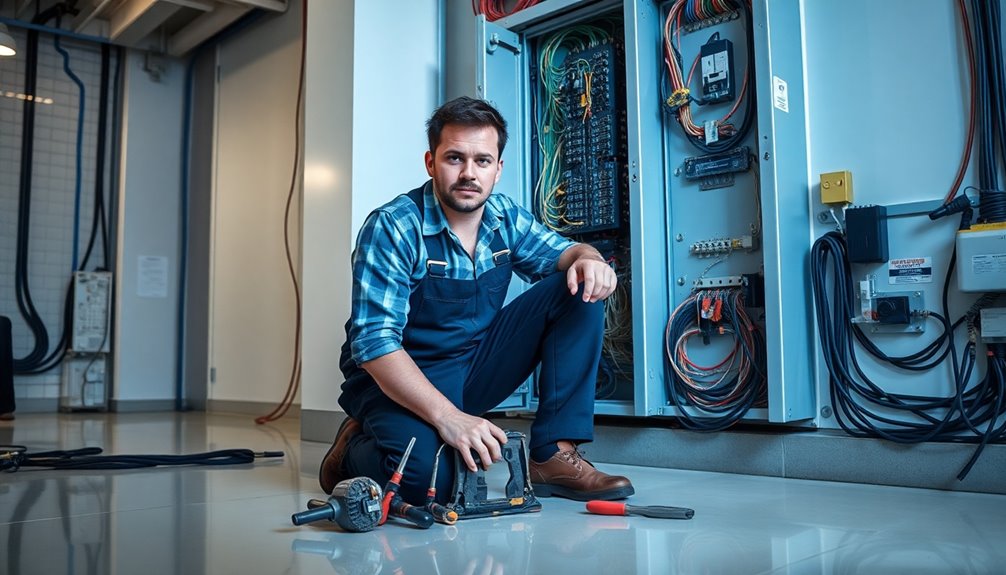
Another critical factor to take into account is device compatibility. Not all smart devices work seamlessly with every home’s electrical system or with each other. Before installing new gadgets, I advise checking the manufacturer’s specifications and compatibility guides. Mismatched devices can cause electrical faults, reduce performance, or even pose safety hazards. For example, some smart switches or outlets may require specific voltage ratings or wiring configurations. If you’re unsure about your home’s electrical capacity, consulting a professional electrician can help make sure that your devices are compatible and safely integrated into your system. Proper compatibility also means making certain that your Wi-Fi network can handle multiple devices without overloading, which can lead to connectivity issues or even electrical strain. Additionally, understanding relationships between electrical components can help prevent hazards and ensure your smart home functions reliably.
It’s tempting to go all-in on the latest smart home tech, but rushing without proper planning can compromise safety. Always read installation instructions carefully, and don’t hesitate to seek expert advice if something feels uncertain. Regularly inspecting your devices and their connections helps catch potential problems early. Additionally, staying aware of updates from manufacturers can alert you to any security patches or safety improvements that should be applied. In my experience, a cautious approach—prioritizing surge prevention and verifying device compatibility—goes a long way in maintaining a safe, efficient smart home environment. Remember, the goal is to enjoy the convenience these devices bring while making sure your electrical system remains safe and reliable.
Frequently Asked Questions
How Do Smart Devices Impact Overall Home Electrical Safety?
Smart devices can improve home safety by alerting me to hazards and automating routines, but they also introduce risks like wireless interference, which can disrupt device functions, and device compatibility issues that may cause malfunctions. I stay vigilant by choosing compatible, high-quality devices and keeping my network secure. Regular updates and proper installation help guarantee my smart home remains safe, efficient, and reliable.
Are There Specific Certifications to Look for in Smart Home Devices?
When shopping for smart home devices, I always check for certification standards and safety markings. These guarantee the product meets essential safety regulations and quality benchmarks. Look for labels like UL, ETL, or CSA—they’re trusted indicators of safety. These certifications give me peace of mind, confirming the device has been tested and complies with safety standards, reducing electrical hazards in my home.
Can Smart Home Devices Prevent Electrical Fires?
Think of smart home devices as vigilant guards watching over your home. They can indeed help prevent fire hazards by monitoring electrical activity and alerting you to device malfunction risks before disaster strikes. However, they’re not foolproof. Relying solely on them isn’t enough; regular checks and proper usage are key to safety. These devices strengthen your defenses, but your awareness remains essential in safeguarding your home.
What Is the Recommended Maintenance Schedule for Smart Home Wiring?
I recommend inspecting your smart home wiring annually. Follow a maintenance checklist that includes a wiring inspection to catch any wear or damage early. Regular checks help ensure your system stays safe and functional. If you notice any issues, like frayed wires or loose connections, address them promptly. Staying proactive with your wiring maintenance not only prolongs the lifespan of your devices but also keeps your home safe from electrical hazards.
How Do I Troubleshoot Electrical Issues With My Smart Home System?
When troubleshooting electrical issues with my smart home system, I start by checking for faulty wiring or loose connections. I look for flickering lights, unresponsive devices, or tripped breakers as clues. I recommend turning off power before inspecting wiring and testing devices with a multimeter. Following these troubleshooting tips helps me identify problems quickly, ensuring my system stays safe and functional without risking electrical hazards.
Conclusion
After exploring how smart home devices impact electrical safety, I believe the key is staying informed and vigilant. While these gadgets offer convenience, they can pose risks if not properly managed. The theory that smart devices automatically improve safety isn’t entirely true—you need to actively maintain and monitor them. By doing so, you can truly enjoy the benefits of a smarter, safer home. Stay cautious, stay connected, and enjoy peace of mind.