I understand that photoelectric smoke alarms are better at detecting slow, smoldering fires with lots of smoke, while ionization alarms detect fast, flaming fires more effectively. If you want thorough protection, using both types is ideal since each covers different fire scenarios. Knowing the strengths of each helps you place alarms wisely. Keep exploring to discover how understanding these differences can keep your home safer and save lives.
Key Takeaways
- Photoelectric alarms detect slow, smoldering fires by sensing smoke particles that scatter light, ideal for bedrooms and living rooms.
- Ionization alarms quickly identify fast, flaming fires by sensing disruptions in electrical charge caused by smoke, suitable for kitchens.
- Using both types offers comprehensive fire detection coverage, covering different fire scenarios effectively.
- Photoelectric alarms respond faster to smoldering fires, while ionization alarms excel at detecting rapid, flaming fires.
- Proper maintenance and timely replacement ensure both alarm types function effectively during emergencies.
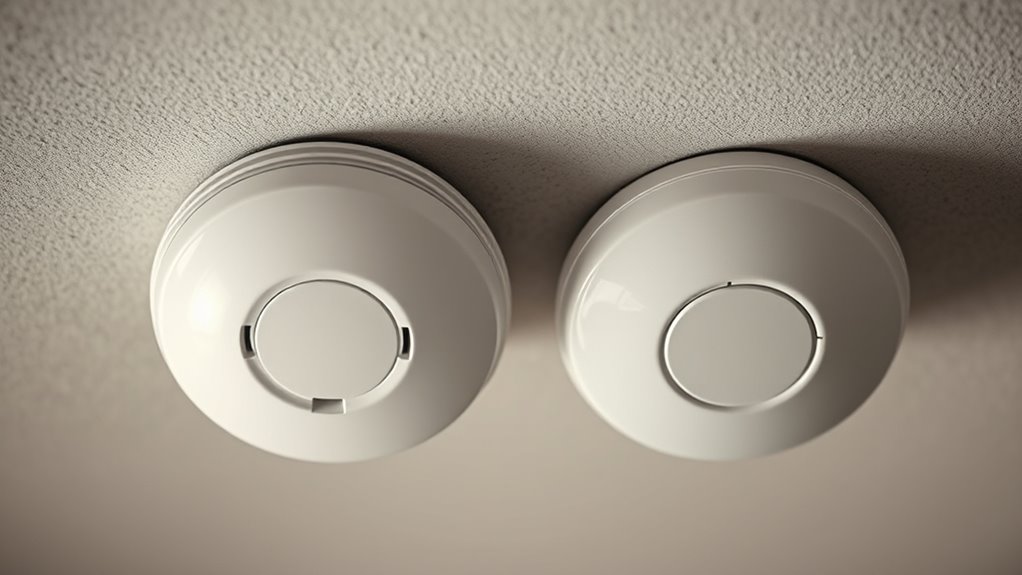
When it comes to protecting your home from fires, understanding the differences between photoelectric and ionization smoke alarms is crucial. Fire safety isn’t something to take lightly, and choosing the right alarms can make a huge difference in how quickly you detect danger. As someone who cares about keeping my family safe, I’ve learned that knowing how these alarms work helps me make better decisions about alarm maintenance and fire safety routines.
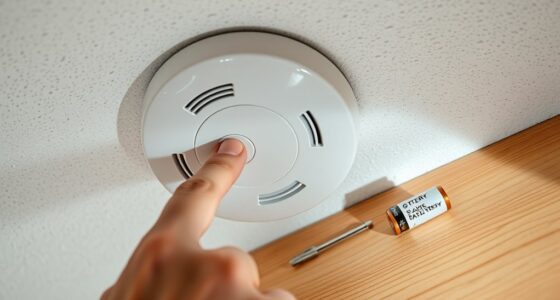
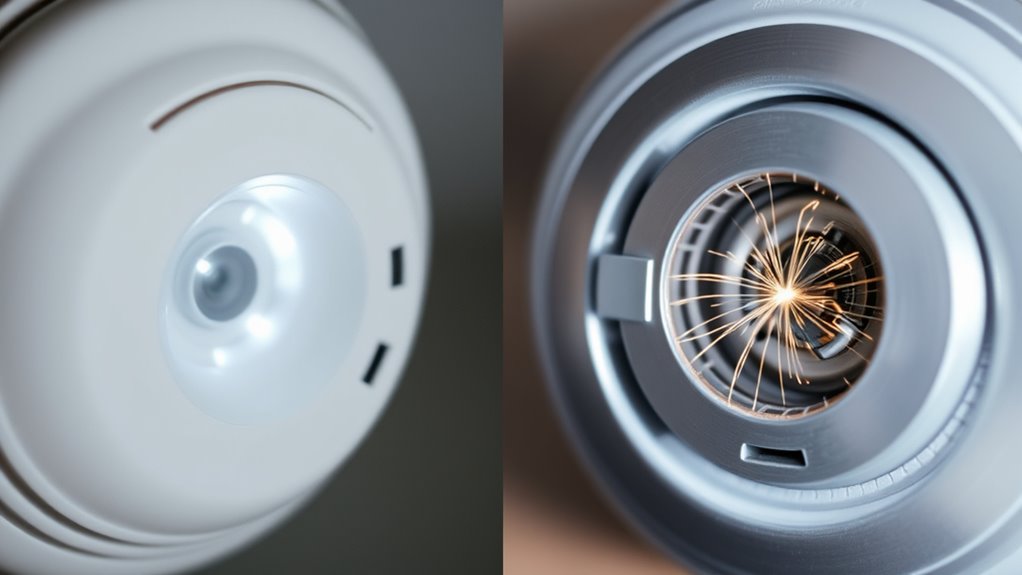
Photoelectric smoke alarms are designed to detect slow, smoldering fires. They use a light source and a sensor positioned at an angle. When smoke particles enter the chamber, they scatter the light, causing it to hit the sensor and trigger the alarm. This means that photoelectric alarms tend to respond faster to fires that produce a lot of smoke but burn slowly, like a cigarette or a smoldering mattress. Because of this, I make sure to install photoelectric alarms in areas where such fires are more likely, like bedrooms and living rooms. Proper alarm maintenance involves regular testing and cleaning to keep the sensors free of dust and insects that could block the light path. I check my alarms monthly, replacing batteries as needed, and follow the manufacturer’s instructions for cleaning.
On the other hand, ionization smoke alarms are better suited for detecting fast, flaming fires. They contain a small amount of radioactive material between two plates, which creates a charge. When smoke enters the chamber, it disrupts this charge, setting off the alarm. I’ve learned that ionization alarms are particularly good at sensing quick-burning fires, like kitchen fires or those involving paper or gasoline. Because of this, I tend to install them in areas prone to such fires, but I also recognize the importance of having both types of alarms throughout my home for thorough fire safety. Alarm maintenance for ionization alarms includes regular testing and replacing batteries or entire units every 10 years, depending on the model. Additionally, I’ve found that energy-efficient appliances can also play a role in reducing fire risks by minimizing electrical hazards.
Understanding what each type detects helps me stay proactive about fire safety. I don’t rely solely on one type of alarm but use both to cover all scenarios. Regular alarm maintenance, including testing, cleaning, and replacing batteries or units, ensures that I’m prepared if a fire ever starts. By knowing what each alarm detects best, I can set up my home with the right combination and keep my family safe. It’s a simple but essential step in responsible fire safety and alarm upkeep, giving me peace of mind and a quicker response in an emergency.
Frequently Asked Questions
Can Both Types of Alarms Be Installed Together Effectively?
Yes, you can install both types of alarms together effectively. Dual sensor effectiveness means combining photoelectric and ionization alarms offers thorough detection of different smoke types. Their installation compatibility is high, and placing them in key areas like bedrooms and kitchens enhances safety. I recommend installing both to guarantee maximum coverage, especially since each alarm detects different fire sources, providing you with the best protection possible.
Do Smoke Alarms Require Frequent Maintenance or Replacement?
Smoke alarms do require regular maintenance to guarantee safety. I recommend testing them monthly and replacing batteries yearly if they’re not wired. The maintenance frequency depends on the alarm’s durability; most units last 8-10 years before needing replacement. Keeping alarms clean and inspecting for damage helps them function properly. Proper upkeep ensures they respond promptly in emergencies, giving you peace of mind and protecting your loved ones.
How Do Smoke Alarms Perform During Power Outages?
Like a lighthouse in a storm, my smoke alarms shine during power outages, thanks to their reliable backup power options. They perform well during outages, ensuring my safety remains intact. I’ve installed battery-operated units and interconnected alarms for enhanced power outage reliability. These backup options give me peace of mind, knowing my alarms will alert me even if the main power fails, keeping my home safe no matter the circumstances.
Are There Specific Environments Better Suited for Each Alarm Type?
Environmental conditions and alarm placement play a big role in choosing the right smoke alarm. Photoelectric alarms work better in environments with frequent dust, humidity, or slow-smoldering fires, while ionization alarms are more responsive to fast-flaming fires. I recommend placing photoelectric alarms in bedrooms and living areas for better detection of slow smoldering fires, and ionization alarms in kitchens and garages where fast fires are more common.
What Are the Cost Differences Between Photoelectric and Ionization Alarms?
When it comes to cost comparison between photoelectric and ionization smoke alarms, I find that ionization alarms are generally more affordable upfront, making them appealing for budget-conscious homeowners. However, installation expenses are similar for both types, as they require basic wiring or battery setup. While ionization alarms tend to cost less initially, investing in photoelectric alarms might save money long-term by providing earlier detection of smoldering fires.
Conclusion
So, which smoke alarm is right for you—photoelectric or ionization? Honestly, understanding their differences can be a game-changer in keeping your home safe. Do you want a device that detects smoldering fires early or one that’s quicker with flaming fires? The truth is, the best choice often depends on your specific needs. Ultimately, installing the right alarm gives you peace of mind—because isn’t safety worth it?