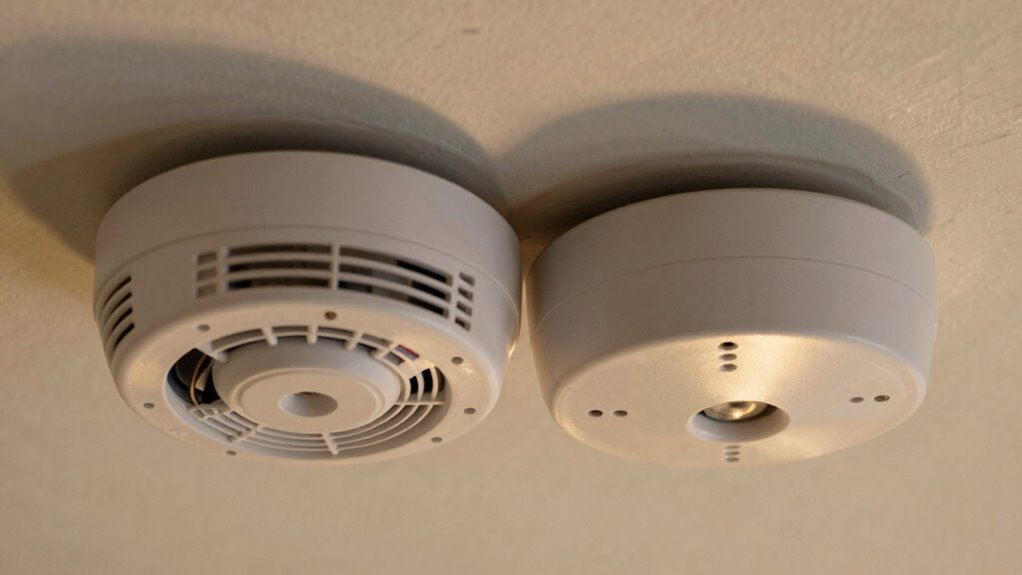
Photoelectric smoke alarms use a light sensor to detect smoke from smoldering fires, giving you early warning for slow-burning fires. Ionization alarms detect fast, flaming fires by sensing changes in electrical current caused by smoke particles. While photoelectric alarms are less prone to false alarms from cooking, ionization alarms react quicker to quick fires. To stay safe, learning about both types helps you make the best choice—there’s more to discover on how each works and how to use them effectively.
Key Takeaways
- Photoelectric alarms detect slow, smoldering fires early by sensing smoke scattering light inside a chamber.
- Ionization alarms respond quickly to fast, flaming fires by measuring changes in electrical current caused by smoke particles.
- Photoelectric alarms are better at reducing false alarms from cooking or dust; ionization alarms are more sensitive to rapid fires.
- Using both types together provides comprehensive fire detection for different fire types and reduces overall risk.
- Regular maintenance, testing, and proper placement are essential for both alarm types to ensure safety.

Smoke Alarm Types
Choosing the right smoke alarm is vital for your safety, as different types detect smoke in various ways. When it comes to fire prevention, understanding the differences between photoelectric and ionization alarms helps you make an informed decision. Each type has strengths and weaknesses, and selecting the best one for your home depends on your specific needs. Proper alarm maintenance is also essential to guarantee they work effectively when you need them most.
Photoelectric smoke alarms use a light sensor and a beam of light inside a chamber. When smoke enters, it scatters the light, causing the sensor to trigger the alarm. These alarms are especially good at detecting slow, smoldering fires that produce lots of smoke but little heat. Because of this, they’re often considered better at early warning for fires that start quietly and smolder for hours before bursting into flames. If you want to improve fire prevention, installing photoelectric alarms in areas prone to slow-burning fires, like bedrooms and living rooms, is a smart choice.
Photoelectric alarms detect slow, smoldering fires with smoke, providing early warning in bedrooms and living rooms.
Ionization alarms, on the other hand, detect smoke by measuring changes in electrical current caused by particles in the air. They contain a small amount of radioactive material between two plates. When smoke particles enter, they disrupt the current, triggering the alarm. Ionization alarms are more responsive to fast, flaming fires that produce smaller smoke particles. They’re ideal for kitchens and garages where quick detection of rapid fires can prevent injuries and property damage. However, because these alarms are sensitive to smoke from cooking or dust, they can sometimes cause false alarms, which makes alarm maintenance important to keep them functioning properly.
Regular alarm maintenance is vital regardless of the type you choose. This includes testing alarms monthly to guarantee they’re working and replacing batteries at least once a year. Some alarms come with long-life batteries, but you should still check their operation periodically. Cleaning the alarms from dust and debris also prevents false alarms and guarantees the sensors work accurately. Keep in mind that some homes benefit from having both types of alarms installed—photoelectric in bedrooms and living areas, ionization in kitchens or areas with potential false alarm triggers. This combined approach enhances fire prevention and safety.
Additionally, understanding fire detection methods can help you better evaluate the effectiveness of your alarms and improve your overall safety strategy. Ultimately, understanding the differences between photoelectric and ionization alarms helps you choose the right device for your home. Proper alarm maintenance, including regular testing and cleaning, guarantees they’ll be ready to warn you when smoke is present. Staying proactive with fire prevention measures and alarm upkeep can make a significant difference in protecting your loved ones and property from fire hazards.
Frequently Asked Questions
How Often Should I Test My Smoke Alarms?
You should test your smoke alarms at least once a month to guarantee they’re working properly. During each test, press the test button and listen for the alarm sound. Remember to replace the batteries annually or whenever they’re low, and always test after replacing batteries or moving the alarm. Regular testing and timely battery replacements keep you safe, so make it a monthly habit for peace of mind.
Can Smoke Alarms Be Interconnected Wirelessly?
Imagine a network of alarms, each whispering alerts in unison. Yes, smoke alarms can be interconnected wirelessly, creating a seamless safety web. With wireless interconnection, when one detects smoke, all sound instantly, alerting everyone nearby. Many smart alarm systems integrate effortlessly, allowing you to control and monitor your alarms remotely. This setup guarantees you’re always connected, always protected—turning a simple safety device into a smart, responsive guardian for your home.
What’s the Lifespan of a Typical Smoke Alarm?
A typical smoke alarm lasts about 8 to 10 years, but you should check the manufacturer’s lifespan estimation. To keep it working properly, replace the batteries annually or when the low-battery alert sounds. Even if it’s hardwired, changing the backup batteries regularly guarantees continuous protection. After about a decade, it’s best to replace the entire unit to ensure you have up-to-date safety features.
Are There Smoke Alarms Suitable for Pets?
Yes, you can find pet-proof smoke alarms with pet safety features that help prevent false alarms caused by pet activity. These alarms are designed with sensitive settings or specific sensors that reduce the likelihood of pets triggering them unnecessarily. By choosing pet-proof smoke alarms, you guarantee your pets’ safety while maintaining reliable fire detection. Always look for models labeled with pet safety features to best protect your furry friends.
How Do I Replace Batteries in Hardwired Alarms?
To replace batteries in your hardwired alarm, first turn off the power at the circuit breaker. Remove the alarm from its mounting bracket, then take out the old batteries. Insert fresh batteries, making sure they’re positioned correctly. Once done, reattach the alarm and turn the power back on. Don’t forget to test your alarm afterward to verify it’s working properly, confirming that the battery replacement was successful.
Conclusion
Choosing between photoelectric and ionization smoke alarms might seem tricky, but it’s a lucky coincidence that both types exist to protect you. Having the right alarm can be the difference between life and death, and knowing their unique strengths helps you make a smarter choice. So, whether you spot a fire early with a photoelectric or catch fast-flaming flames with ionization, you’re better prepared. It’s no coincidence—you’re now equipped to keep your home safer.