
When lights flicker, it could be a loose neutral or an overload issue. A loose neutral disrupts the voltage balance and can cause flickering across multiple outlets, often with buzzing sounds. Overloads happen when too much current flows through a circuit, causing lights to flicker or dim. To tell them apart, observe if multiple fixtures flicker or just one. Stay with me, as I’ll explain how to troubleshoot and fix these common problems effectively.
Key Takeaways
- Loose neutral connections cause flickering across multiple fixtures, especially when appliances turn on or off.
- Overloading circuits typically lead to flickering during high power demand, often localized to specific areas.
- Check for buzzing sounds or visible wiring issues to identify loose neutral wiring.
- Overload flickering tends to occur only when multiple high-power devices are used simultaneously.
- Professional inspection is recommended to accurately diagnose and safely repair loose neutral or overload issues.
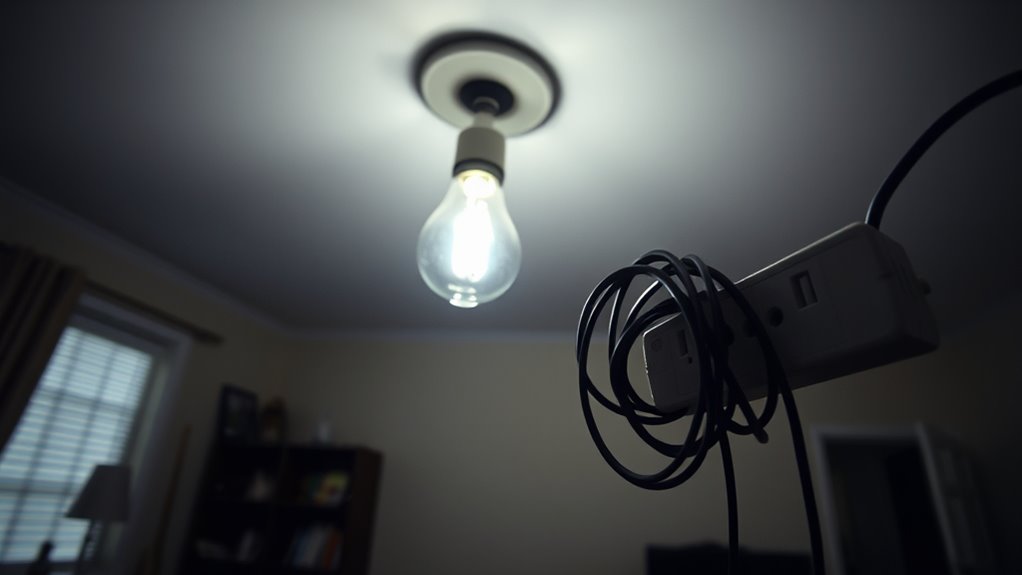
If your lights flicker occasionally, it can be a frustrating experience, but understanding the cause is essential. One common culprit is grounding issues, which often lead to flickering lights. Grounding problems happen when the electrical system isn’t properly connected to the earth, causing unstable voltage flow. When this occurs, you might notice flickering that seems to come and go, especially when appliances turn on or off. Sometimes, poor grounding can also cause sparks or a tingling sensation if you touch switches or outlets. It’s important to address grounding issues promptly because they compromise safety and can damage your electrical devices.
Flickering lights often indicate grounding issues that can affect safety and damage devices.
Another frequent cause of flickering is a switch malfunction. Switch problems happen when a switch doesn’t make proper contact or wears out over time. When the switch isn’t functioning correctly, it can cause intermittent connections, leading to flickering lights. This issue is especially common with older switches or those that have been exposed to moisture or frequent toggling. If you notice flickering only when you operate a specific switch, that’s a strong sign it might be malfunctioning. Replacing the switch often resolves the problem, but it’s essential to verify that the replacement is correctly installed to prevent further issues.
Distinguishing between a grounding issue and a switch malfunction is vital because they require different solutions. Grounding issues tend to affect multiple lights or outlets across your home, especially if they’re on the same circuit. You might also hear buzzing sounds or see visible signs of loose wiring where the grounding wire connects. On the other hand, flickering caused by a switch malfunction generally affects only the light connected to that specific switch. If flickering happens only in one fixture and coincides with switch operation, you’re likely dealing with a switch problem.
It’s tempting to try fixing these issues yourself, but electrical problems can be dangerous. If you suspect grounding issues or a switch malfunction, it’s best to consult a licensed electrician. They can perform precise tests, such as checking for proper grounding or ensuring the switch’s internal contacts are sound. Addressing grounding issues not only stops flickering but also enhances safety, reducing the risk of electrical shocks or fires. Similarly, replacing a faulty switch guarantees that your lights operate smoothly and reliably.
In short, flickering lights aren’t just an annoyance—they’re a sign that something’s off with your electrical system. Whether it’s grounding issues or switch malfunctions, understanding the difference helps you take the right steps toward fixing the problem safely and effectively.
Frequently Asked Questions
Can Flickering Lights Indicate a Wiring Problem Elsewhere in the House?
Yes, flickering lights can signal wiring problems elsewhere in your house. Grounding issues or a circuit overload might cause inconsistent power flow, leading to flickering. If you notice this, it’s wise to check for loose connections or signs of overloaded circuits. Don’t dismiss these symptoms, as they could indicate larger electrical faults that need professional attention to ensure safety and proper function.
How Can I Prevent Loose Neutrals From Recurring?
I’ve found that preventing loose neutrals often involves addressing grounding issues and circuit breaker faults. Regularly inspect and tighten all connections, especially in outlets and panels, to make certain they’re secure. Using high-quality wiring and components helps minimize wear and corrosion. Additionally, schedule routine professional inspections, as they can detect subtle grounding or breaker problems before they cause flickering or outages, keeping your home’s electrical system safe and reliable.
Are Flickering Lights Dangerous to My Appliances?
Flickering lights can pose electrical safety risks and potentially damage your appliances. I’d advise you to take this seriously because consistent flickering might indicate underlying issues like loose neutrals or overloads. These problems can lead to electrical fires or appliance failure. To protect your home and devices, I recommend having a qualified electrician inspect your wiring promptly. Don’t ignore flickering lights—they’re often a warning sign of a bigger electrical safety concern.
What Tools Do I Need to Diagnose Electrical Issues at Home?
Think of diagnosing electrical issues like a detective searching for clues. I grab a multimeter for testing voltage and continuity, and I do a thorough circuit inspection. These tools help me identify loose connections or overloads causing flickering. With a multimeter, I can measure voltage levels, and inspecting circuits guarantees everything’s properly connected. These simple tools make it easier to keep your home safe and avoid potential hazards.
When Should I Call a Professional Electrician for Flickering Lights?
If your lights flicker frequently or unpredictably, I recommend calling a professional electrician immediately. Electrical safety is paramount, and flickering lights can signal serious issues like a loose neutral or overload. While troubleshooting tips can help identify minor problems, persistent flickering requires expert assessment to prevent fire hazards or damage. Don’t risk DIY fixes—trust a licensed electrician to diagnose and resolve the issue safely and effectively.
Conclusion
So, whether your lights flicker because of a loose neutral or an overload, each issue tells a different story about your home’s wiring. One is a quiet threat lurking behind the scenes, while the other is a sign of a system overwhelmed. Both demand attention, yet their causes and solutions differ. Recognizing the subtle difference can mean the difference between a quick fix and a costly repair—reminding us that sometimes, what we don’t see is the most important clue.