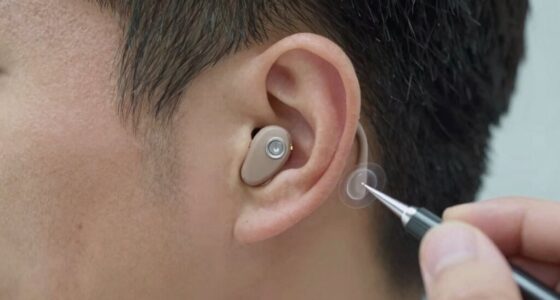
Swimmer’s ear affects the outer ear and often causes pain when touching or pulling on the ear, along with itching, redness, and water sensation. In contrast, middle ear infections cause deep aching pain, hearing loss, and sometimes fever, usually following a cold or respiratory illness. Treatment differs: swimmer’s ear needs ear dryness and drops, while middle ear infections might require antibiotics. Keep exploring to learn more about how to tell them apart and care effectively.
Key Takeaways
- Swimmer’s ear affects the outer ear canal, causing pain when touching or pulling the ear, often after water exposure.
- Middle ear infections occur behind the eardrum, presenting as deep, aching pain with possible hearing loss and fever.
- Swimmer’s ear symptoms include redness, swelling, itching, and water sensation; middle ear infections involve ear pain, fullness, and sometimes fever.
- Treatment for swimmer’s ear emphasizes keeping the ear dry, using prescribed ear drops, and avoiding inserting objects; middle ear infections may need antibiotics.
- Proper diagnosis differentiates the location of pain and triggers, ensuring targeted treatment for outer ear (swimmer’s ear) versus middle ear infections.

Many people confuse swimmer’s ear with middle ear infections because both affect the ear and can cause discomfort, but they are actually quite different. When I think about swimmer’s ear, I picture an infection that takes hold in the outer ear, specifically the ear canal. This is the tube running from the eardrum to the outside world. It’s a narrow passage, and when water gets trapped there, it creates a perfect environment for bacteria or fungi to thrive. That’s why it’s called “swimmer’s ear”—because exposure to water, especially in contaminated pools or lakes, increases the infection risks. If the ear canal’s skin becomes damaged or inflamed, bacteria can invade easily, leading to painful symptoms. The key point here is that swimmer’s ear is an outer ear issue, not a problem with the middle ear itself.
In contrast, middle ear infections affect the space behind the eardrum, called the middle ear. These infections usually develop after a cold or respiratory illness when bacteria or viruses travel from the upper respiratory tract into the middle ear via the Eustachian tube. Unlike swimmer’s ear, which starts in the ear canal, middle ear infections involve the tiny bones and fluid buildup behind the eardrum. The symptoms differ too—middle ear infections often cause a deep, aching pain, hearing loss, and sometimes fever. They don’t result from water exposure directly but can be triggered by infections that spread from the throat or nasal passages. Recognizing the distinct causes of each condition can help in choosing the appropriate treatment.
Understanding the differences helps you figure out the right care. For swimmer’s ear, keeping the ear dry is essential. I recommend gently drying the ear after swimming or bathing and avoiding inserting anything into the ear canal. If infected, I might suggest ear drops prescribed by a doctor to combat the bacteria or fungi. Because the ear canal is so sensitive and prone to infection risks, I always emphasize prevention—wearing earplugs while swimming and avoiding contaminated water. Meanwhile, middle ear infections often require antibiotics if bacterial, or pain relievers to manage symptoms. They might also resolve on their own, but persistent infections need medical attention to prevent complications.
Ultimately, recognizing whether you have swimmer’s ear or a middle ear infection makes a big difference in treatment and recovery. Both can be painful, but their causes and care strategies are distinct. Paying attention to where the pain is, how it feels, and what triggers it can help you seek appropriate treatment faster. And remember, when in doubt, visiting a healthcare professional is the best way to get an accurate diagnosis and proper care.
Frequently Asked Questions
Can Swimmer’s Ear Lead to a Middle Ear Infection?
Yes, swimmer’s ear can lead to a middle ear infection if untreated. When water gets trapped in the ear canal, it causes blockage and creates a perfect environment for bacteria to thrive. Over time, the infection can spread through the Eustachian tube to the middle ear. To prevent this, I recommend drying your ears thoroughly after water exposure and seeking prompt treatment if you notice symptoms.
Are Antibiotics Effective for Both Swimmer’s Ear and Middle Ear Infections?
Antibiotics are like superheroes for ear infections—they’re usually very effective! For swimmer’s ear, antibiotic ear drops often clear things up in days. Middle ear infections sometimes need oral antibiotics for full recovery. But, not all ear infections respond to antibiotics, so it’s essential to get a proper diagnosis. Trust me, effective ear infection treatment makes all the difference in ending ear pain and preventing complications!
How Long Does It Take to Recover From Each Condition?
Recovery timeline varies, but I usually see improvement within a few days of proper treatment. For swimmer’s ear, the treatment duration is typically 7 to 10 days, and I recommend following your doctor’s advice closely. Middle ear infections often take about 1 to 2 weeks to recover from, especially with antibiotics. Staying consistent with treatment and keeping the ear dry helps speed up the recovery process.
Can Swimming Make Ear Infections Worse?
Did you know that about 80% of swimmer’s ear cases are caused by water entering the ear? Swimming can definitely make ear infections worse if you don’t use proper ear protection. Water safety is essential—wear ear plugs or a swim cap to prevent water from getting in. Keeping your ears dry helps reduce infection risk and promotes faster healing, so always prioritize ear protection during water activities.
Are There Natural Remedies to Prevent Ear Infections?
Yes, I believe herbal remedies and good ear hygiene can help prevent ear infections. I use natural oils like tea tree or garlic oil, which have antimicrobial properties, but I make sure to keep my ears dry and clean. Avoid inserting objects into your ears, and dry them thoroughly after swimming. These habits and herbal remedies can reduce the risk of infection and keep your ears healthy.
Conclusion
So there you have it—your quick guide to telling swimmer’s ear from a middle ear infection. Because nothing screams “fun summer” like debating which ear ache is which, right? Just remember, if you’re still confused, maybe skip the DIY diagnosis and see a pro. After all, you’d rather be swimming than dealing with the drama of misdiagnosed ear woes. Stay safe, keep those ears dry, and don’t try to outsmart your doctor!