To understand your audiogram, look at the vertical axis for how quiet or loud sounds are detected—so, higher up means softer sounds. The horizontal axis shows different pitches from low to high. Symbols represent each ear: circles for the right, X’s for the left. Normal hearing is usually between 0-25 dB. By checking where your thresholds fall, you can see if you have hearing loss and what types. If you’re curious about these patterns, there’s more to explore below.
Key Takeaways
- The vertical axis shows hearing sensitivity in decibels (dB), with softer sounds at the top and louder at the bottom.
- The horizontal axis displays frequency from low (left) to high (right), representing different pitches.
- Circles indicate thresholds for the right ear, and X’s for the left ear; their position shows hearing ability at each frequency.
- Normal hearing is typically between 0-25 dB, while elevated thresholds suggest hearing loss.
- Patterns across frequencies reveal the type and severity of hearing impairment, guiding treatment options.
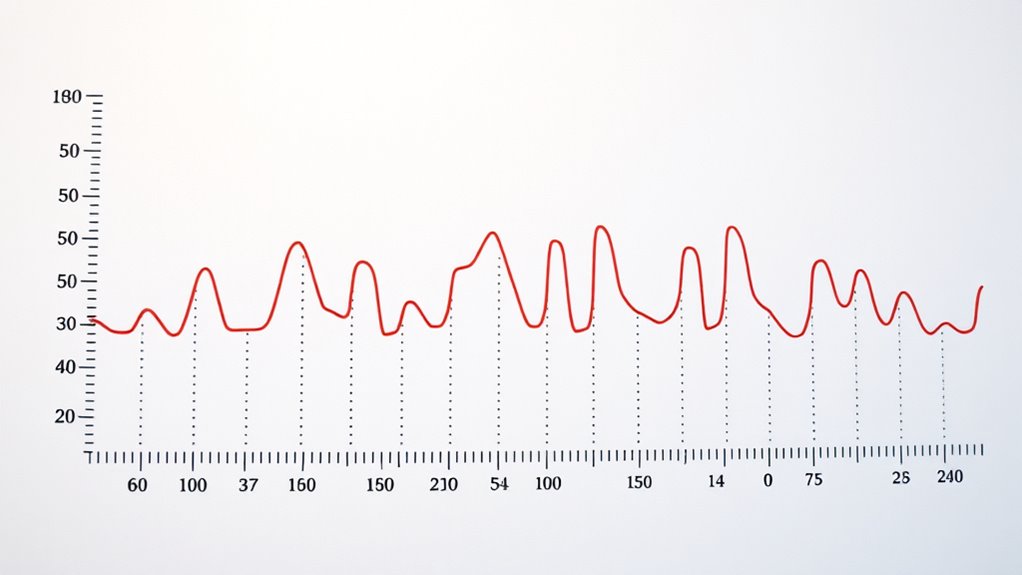
An audiogram is an indispensable tool that helps us understand hearing ability by visually representing how well you can hear different sounds. When you look at an audiogram, you’re fundamentally seeing a graph that shows your hearing thresholds across various frequency ranges. These thresholds indicate the softest sounds you can detect at specific pitches, which is vital for assessing your hearing health. Think of hearing thresholds as the quietest sounds you can perceive; the lower the threshold, the better your hearing sensitivity at that particular frequency.
An audiogram visually shows your hearing thresholds across different pitches and intensities.
The audiogram’s vertical axis measures intensity in decibels (dB), with softer sounds at the top and louder sounds at the bottom. The horizontal axis represents frequency ranges, typically from low pitches like bass notes to high pitches like the chirping of birds. When your hearing thresholds are plotted, they form a pattern that reveals your ability to hear across these frequencies. If your thresholds are close to the normal range, it suggests your hearing is within typical limits. However, if they’re elevated, it indicates some degree of hearing loss, which might be more pronounced at certain frequencies.
One of the most important aspects of reading an audiogram is understanding how your hearing varies across the frequency ranges. For instance, some people experience hearing loss mainly in high-frequency ranges, which might make it difficult to understand speech, especially in noisy environments. Others might have a more uniform hearing loss across all frequencies. Recognizing these patterns helps audiologists diagnose the type and severity of hearing loss accurately.
The thresholds are represented by symbols—usually circles for your right ear and x’s for your left ear—plotted across the frequency spectrum. By examining where these symbols lie relative to the normal hearing zone, you can get a clear sense of your hearing health. A normal hearing threshold is typically between 0 and 25 dB across all frequencies. When thresholds fall above this range, it indicates some degree of hearing impairment. The specific frequencies affected and the extent of threshold elevation guide treatment options, such as hearing aids or other interventions.
Understanding your audiogram isn’t just about numbers; it’s about grasping how your hearing changes across different sounds and pitches. This visual tool helps both you and your audiologist pinpoint what’s going on and how best to address any issues. Advancements in hearing technology, such as digital hearing aids, are continually improving to better accommodate individual hearing profiles. So, when you see your audiogram, remember it’s a detailed map of your hearing, highlighting your strengths and areas that may need support.
Frequently Asked Questions
How Often Should I Get an Audiogram?
I recommend scheduling a hearing test every 1 to 3 years, depending on your hearing health and risk factors. Regular audiogram scheduling helps catch any changes early, especially if you notice hearing difficulties. If you’re exposed to loud noises or have a family history of hearing loss, more frequent testing might be necessary. Staying proactive with your hearing test frequency guarantees you maintain good hearing health and address issues promptly.
Can Audiograms Detect All Types of Hearing Loss?
Sure, audiograms are fantastic, but they’re not perfect detectives. They can spot many types of hearing loss, yet they have limitations—like missing hidden or subtle issues. I’ve learned that while they reveal a lot about hearing loss, they can’t detect every problem, especially certain inner ear or neurological conditions. So, if something feels off, don’t rely solely on an audiogram; see a specialist for a thorough assessment.
What Do I Do if My Results Are Abnormal?
If your results are abnormal, I recommend consulting a specialist promptly. They can evaluate your specific condition and discuss treatment options, which may include hearing aids, medication, or surgery. Don’t delay—early intervention often leads to better outcomes. A specialist can provide personalized advice and support, ensuring you get the right treatment to improve your hearing health. Reach out to an audiologist or ENT doctor for guidance.
How Do Age or Noise Exposure Affect Audiogram Results?
You might think age or noise exposure don’t matter, but they really do affect audiogram results. Age-related decline can cause gradual hearing loss, while noise-induced damage often results in sudden shifts. I’ve seen how both factors shift hearing thresholds over time. If you’re exposed to loud environments regularly or are aging, it’s smart to get your hearing checked often. This way, you catch issues early and protect your hearing health.
Are There Different Types of Audiograms for Children?
Yes, there are different types of audiograms for children, specifically pediatric audiograms used in child hearing assessments. These audiograms are tailored to children’s unique hearing needs and developmental stages. I find that pediatric audiograms often include additional tests and visual cues to help interpret results accurately for young children. If you’re concerned about your child’s hearing, I recommend seeking a specialist who can perform thorough child hearing assessments using these specialized audiograms.
Conclusion
Understanding your audiogram can be eye-opening—did you know that nearly 15% of American adults have some form of hearing loss? By learning to read your results, you take control of your hearing health. Remember, early detection makes a big difference, so don’t hesitate to consult a professional if something looks off. Staying informed helps you enjoy life’s sounds to the fullest. Your hearing matters—take charge today!