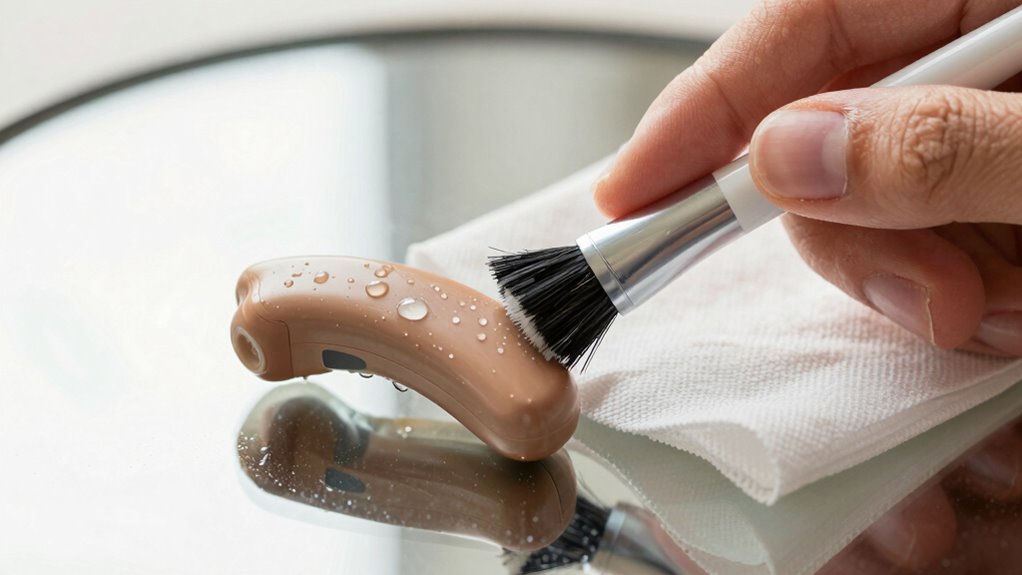
To keep your hearing aids clean and functioning well, regularly remove wax and moisture using a soft, dry cloth, and avoid exposing them to humidity or heat. Open the battery compartment nightly to let residual moisture evaporate and inspect for mold or corrosion. Store your devices in a dry, cool place and use a dehumidifier if needed. Consistent care helps prevent buildup and device failure—continue caring for your hearing aids properly to make certain of long-lasting performance.
Key Takeaways
- Clean ear molds and domes regularly with a soft, dry cloth to remove wax and debris.
- Open the battery compartment nightly to allow moisture evaporation and prevent mold growth.
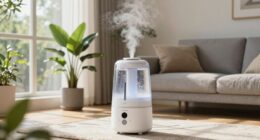
- Use a dehumidifier designed for hearing aids to reduce moisture and prolong device lifespan.
- Avoid exposing the hearing aid to humid environments; store in a cool, dry place when not in use.
- Check for signs of wax buildup or moisture, and seek professional cleaning if necessary.
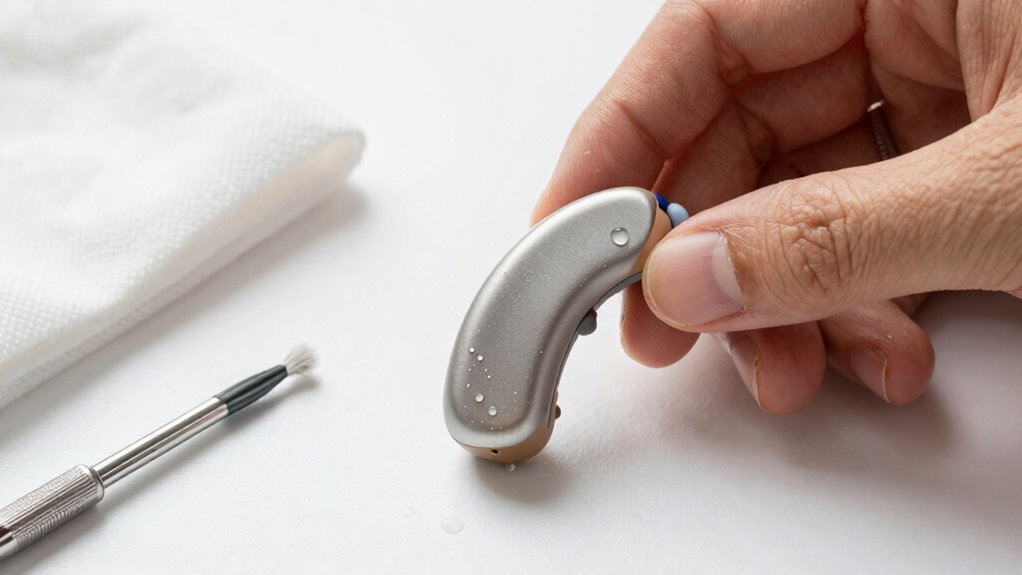
Have you ever wondered how to keep your hearing aid functioning at its best? Proper cleaning and maintenance are essential, and two critical aspects are battery maintenance and mold prevention. Keeping your device in ideal condition means paying attention to how you handle the batteries and preventing moisture buildup that can lead to mold growth. By taking a few simple steps daily, you can extend the life of your hearing aid and ensure it performs reliably.
Battery maintenance starts with regular checks. Make it a habit to open the battery compartment at night to allow any residual moisture to evaporate. Always use fresh, high-quality batteries, and avoid leaving them in the device longer than necessary. When replacing batteries, handle them with dry hands to prevent transferring moisture or oils that could cause corrosion over time. Store spare batteries in a cool, dry place, away from direct sunlight or humidity, to prolong their shelf life. It’s also wise to keep a backup set handy in case your current batteries run out unexpectedly. Proper battery care not only guarantees your hearing aid functions consistently but also minimizes the risk of damage caused by battery leakage or corrosion.
Mold prevention is equally essential, especially since moisture is a primary factor in mold growth inside hearing aids. To prevent mold buildup, keep your device dry and avoid exposing it to excessive humidity. After removing your hearing aid, gently wipe it with a soft, dry cloth to eliminate sweat, oil, and moisture. Use a dehumidifier designed for hearing aids if you live in a humid climate or if your device tends to trap moisture. Regularly inspecting and cleaning the ear molds or domes helps prevent mold spores from settling and multiplying. If you notice any discoloration, foul odor, or a change in sound quality, it’s a sign you should clean the device thoroughly or seek professional servicing. Additionally, utilizing natural drying methods can help reduce moisture without the need for harsh chemicals. Remember, mold not only damages your hearing aid but can also cause ear infections, so prevention through consistent cleaning and moisture control is essential.
Incorporating these practices into your daily routine will make a noticeable difference in your hearing aid’s longevity and performance. Proper battery maintenance ensures your device remains powered and reliable, while mold prevention keeps it hygienic and free from microbial growth. With just a few minutes each day, you can avoid common issues and enjoy clear, comfortable hearing. Maintaining your hearing aid isn’t complicated, but it requires diligence and awareness. Taking these small steps will help you maximize your investment, keep your hearing aid functioning at its best, and ultimately improve your quality of life.
Frequently Asked Questions
How Often Should I Replace My Hearing Aid Batteries?
You should replace your hearing aid batteries every 3 to 10 days, depending on the battery lifespan and your usage. Keep an eye on the battery indicator, and replace them as soon as you notice reduced sound quality or if your hearing aid stops working. Regular replacement guarantees peak performance. To extend battery life, turn off your hearing aid when not in use, and store batteries properly.
Can I Use Alcohol to Disinfect My Hearing Aids?
Can alcohol really be safe for disinfecting your hearing aids? It’s best to avoid alcohol-based sprays and disinfectant wipes, as they can damage delicate components. Instead, opt for manufacturer-approved cleaning solutions or wipes designed specifically for hearing aids. Do you want to prolong their lifespan and guarantee ideal performance? Using improper disinfectants can cause harm, so stick to gentle, approved cleaning methods to keep your devices safe and hygienic.
What Should I Do if My Hearing Aid Stops Working After Cleaning?
If your hearing aid stops working after cleaning, start troubleshooting by checking the battery and making certain it’s properly inserted. Refer to your maintenance checklist to verify all parts are dry and free of debris. Gently clean any blocked openings with a soft brush. If it still doesn’t work, consult your audiologist or technician for further troubleshooting tips, as there might be internal issues needing professional repair.
Are There Specific Cleaning Products Recommended for Different Hearing Aid Models?
Imagine a toolkit tailored just for your hearing aids—custom cleaning kits that fit perfectly. You should always use manufacturer recommended products to avoid damage and guarantee ideal performance. Different hearing aid models may require specific cleaning solutions, so check your device’s guidelines or consult your audiologist. Using the right products protects your investment and keeps your hearing aids functioning smoothly, just like a bespoke suit fits perfectly.
How Can I Prevent Ear Infections Related to Hearing Aid Use?
To prevent ear infections, you should follow good hygiene tips and maintain proper hearing aid care. Always clean your device regularly to remove wax and moisture, which can harbor bacteria. Make sure your ears are dry before inserting your hearing aids, and avoid sharing them. Additionally, schedule regular check-ups with your audiologist to catch any issues early. Keeping your hearing aids and ears clean is essential for ear infection prevention.
Conclusion
So, next time you neglect your hearing aid’s daily care, remember it’s just waiting to turn into a tiny swamp of wax and moisture—your own personal swamp monster. Ironically, with a little daily effort, you can keep it clear and functioning perfectly, instead of silently suffering through muffled sounds and squeals. After all, who knew that tiny device you rely on so much could be so high-maintenance? Keep up with the care, or prepare for an unwanted swamp tour.