
Understanding earwax, or cerumen, helps me keep my ears healthy. It’s normal to see a small amount at the opening of the ear canal because it acts as a natural protector, trapping dirt and microbes. Excessive wax can cause muffled hearing or discomfort, but I shouldn’t try to remove it myself. Instead, I seek professional help if needed. Keep going to discover how to manage earwax safely and when to get expert advice.
Key Takeaways
- Normal earwax appears at the ear canal opening and indicates healthy ear function.
- Small amounts of wax help protect and moisturize the ear, signifying proper production.
- Excessive buildup can cause fullness, muffled hearing, or discomfort, but removal is only needed if impacted.
- Avoid inserting objects like cotton swabs; seek professional help for safe removal if wax causes problems.
- Consult a healthcare provider if experiencing persistent symptoms such as hearing loss or ear pain.

Have you ever wondered what earwax actually is and why our bodies produce it? It’s a good question because earwax, or cerumen, often gets a bad rap, but it actually plays an important role in maintaining ear health and hearing safety. Your ears are self-cleaning organs, and cerumen acts as a natural barrier, trapping dust, dirt, and microorganisms before they can reach sensitive parts deep inside. It also has antimicrobial properties that help prevent infections. When functioning normally, earwax moves gradually out of the ear canal, carrying debris with it, and doesn’t usually cause any problems.
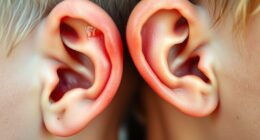
Understanding what’s normal when it comes to earwax can help you avoid unnecessary worry or damage. Usually, a small amount of wax is visible at the opening of your ear canal, and that’s perfectly fine. It’s a sign that your body is doing its job, protecting your ear from potential irritants. The key is to keep it in balance—enough to serve its protective purpose, but not so much that it causes blockage or impairs hearing. Excessive buildup can lead to a feeling of fullness, muffled hearing, or even discomfort. But it’s important to remember that not all wax buildup requires removal. Trying to clean your ears aggressively or insert objects like cotton swabs can push wax deeper, risking impaction or damaging the delicate skin inside your ear canal. That’s why hearing safety is essential; improper cleaning habits can lead to more harm than good.
If you notice symptoms like persistent earache, ringing, or significant hearing loss, it’s wise to consult a healthcare professional. They can assess whether the wax is causing the problem and safely remove it if necessary. Often, they’ll recommend gentle methods such as ear irrigation or professional extraction rather than attempting to remove wax yourself. This approach helps preserve your ear’s natural defenses and prevents accidental injury. Remember, your ears are delicate, and maintaining ear health means respecting their natural processes. Trying to force out wax on your own can do more harm than good, so it’s best to seek expert advice when needed. Additionally, understanding earwax production can help you better manage your ear health and prevent complications. Ultimately, understanding your ear’s natural wax production and practicing safe habits helps you protect your hearing safety and keep your ears healthy over time.
Frequently Asked Questions
Can Earwax Be a Sign of Other Health Problems?
Yes, earwax can sometimes indicate other health issues. For example, excessive earwax might be linked to allergies, which cause inflammation and increased wax production. It can also be a sign of ear infections if you notice pain, itching, or discharge along with changes in earwax. If you experience persistent problems or unusual symptoms, I recommend seeing a healthcare professional to rule out any underlying conditions.
How Does Earwax Production Vary by Age?
Research suggests that earwax production and consistency do change with age. I’ve noticed that in children, earwax tends to be softer and more abundant, while in older adults, it often becomes drier and less frequent. Age-related changes in earwax are influenced by the slowing of gland activity, which affects its consistency. This variation helps explain why earwax management needs can differ across different life stages.
Are There Natural Remedies to Prevent Earwax Buildup?
Yes, there are natural home remedies to help prevent earwax buildup. I recommend practicing good ear hygiene by gently cleaning the outer ear with a damp cloth and avoiding inserting objects. Using warm mineral or olive oil drops can soften earwax, making it easier to naturally exit. Just remember, never insert anything deep into your ear canal, and if you’re unsure, consult a healthcare professional for safe advice.
What Are the Risks of Using Cotton Swabs?
Did you know that using cotton swabs can cause ear canal damage in up to 90% of users? I’ve seen many people risk infections and even puncture their eardrum just to remove wax. Cotton swabs push wax deeper, increasing the infection risk and damaging sensitive ear tissues. I strongly recommend avoiding them and instead using safer methods like ear drops or seeking professional help for proper cleaning.
How Often Should I Have My Ears Checked by a Professional?
I recommend having your ears checked by a professional at least once a year to maintain good ear health. If you experience any discomfort, hearing loss, or notice a buildup of earwax, don’t wait—schedule a checkup sooner. Regular professional checkups help prevent issues from becoming serious and guarantee your ears stay healthy. Remember, early detection and proper ear care are key to keeping your hearing sharp and ears comfortable.
Conclusion
Think of earwax as your body’s natural guardian, a gentle sentinel guarding your hearing and balance. When it’s in harmony, it’s like a quiet rhythm, softly protecting without disturbance. But when it builds up or becomes troublesome, it’s like a storm on the horizon—time to listen to your body’s signals and act. Respect this silent guardian; it’s part of your inner orchestra, playing its essential role in keeping you safe and sound.