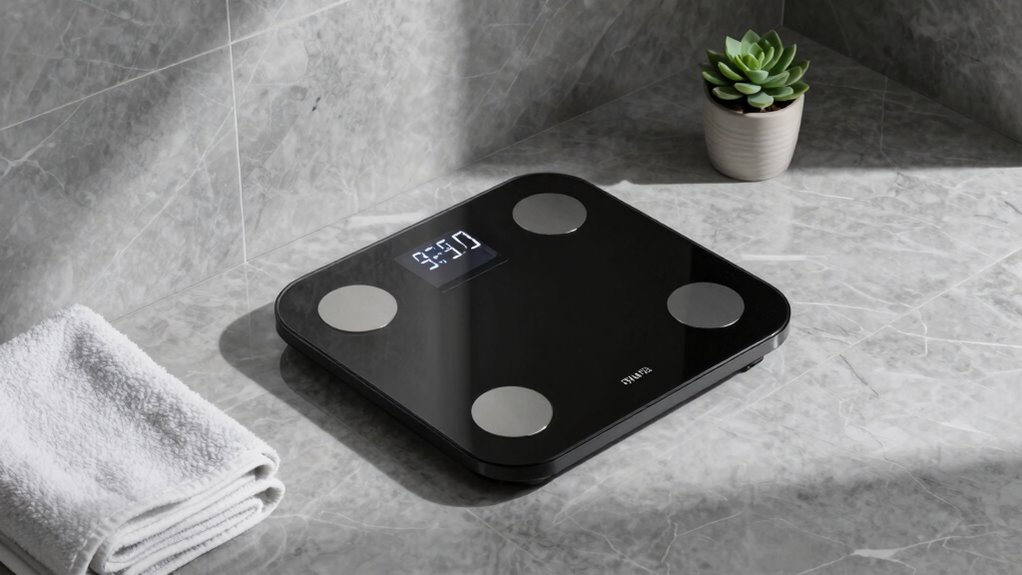

Smart scales can motivate you by providing instant feedback on your health metrics like weight, body fat, and muscle mass, helping you see progress and set realistic goals. However, they can also cause stress if numbers fluctuate or don’t meet your expectations, leading to frustration or emotional reactions. How you interpret and respond to your data influences whether you’ll stay motivated or feel overwhelmed. Keep exploring to discover strategies that balance these effects and support your health journey.
Key Takeaways
- Instant feedback from smart scales can motivate by showing progress but may cause stress if numbers fluctuate or stagnate.
- Data interpretation can lead to emotional reactions, turning motivation into frustration or anxiety.
- Privacy concerns about data sharing can create insecurity, reducing user trust and engagement.
- Clear, actionable insights encourage consistency, while overemphasis on metrics may increase pressure and stress.
- Mindful use and understanding data limitations promote a healthy balance between motivation and emotional well-being.
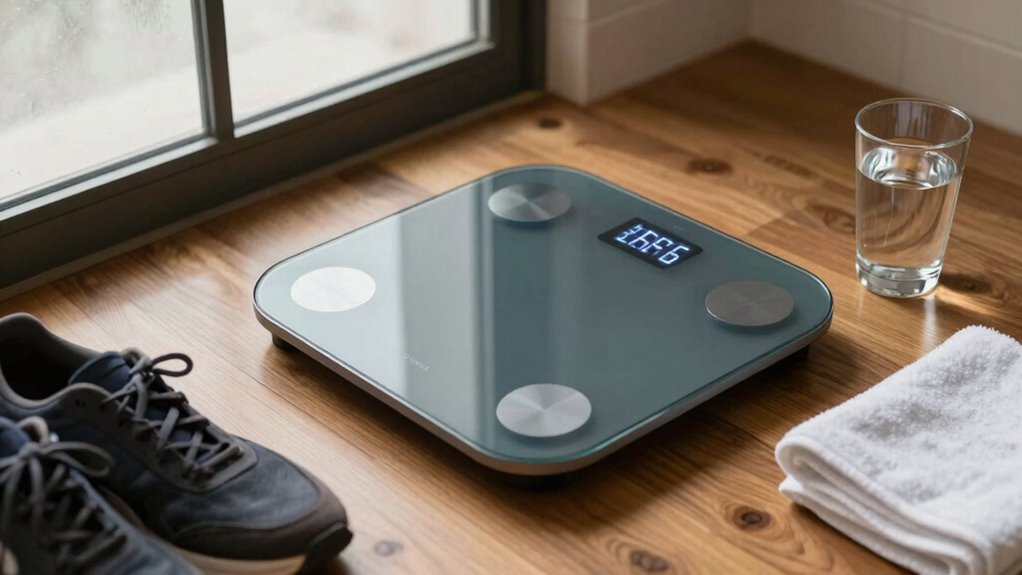
Smart scales have become popular tools for tracking health, but they can have mixed effects on your motivation and stress levels. When you step on one, the device instantly measures your weight, body fat percentage, muscle mass, and other metrics. These numbers can feel like a quick snapshot of your health progress, giving you immediate feedback that can motivate you to stay active or eat better. However, the way you interpret and react to this data can also cause stress, especially if the numbers don’t meet your expectations or seem inconsistent over time.
One concern that often arises with smart scales is data privacy. When you sync your health data to a smartphone app or cloud service, you’re sharing sensitive information that can be vulnerable if not properly protected. If you’re worried about who has access to your data or how it’s being stored, it can create anxiety and undermine your motivation. You might think twice before using the device regularly, fearing that your personal health information could be compromised or misused. This concern about data privacy impacts your user engagement, as it influences how comfortable you feel making the most of these tools. Feeling uncertain about your data’s security can lead to sporadic use or even abandonment of the device altogether.
Concerns over data privacy can reduce motivation and lead to inconsistent use of smart scales.
On the flip side, these scales can boost user engagement when they provide clear, actionable insights and motivate you to improve your health. When the device offers visual progress over time, it encourages consistency and helps you set realistic goals. If you notice your weight stabilizing or decreasing, you might feel a sense of achievement that propels you to keep going. Conversely, if your numbers fluctuate wildly or stay stagnant, it can discourage you and make you question whether your efforts are paying off. This emotional rollercoaster highlights how important it is for these devices to present data in a supportive, non-judgmental way to keep you motivated rather than stressed out. Recognizing the multifaceted nature of health can also help you appreciate the broader context of your wellness journey and reduce the pressure to have perfect numbers. Additionally, understanding the role of biodiversity in overall health can help you maintain a broader perspective on wellness, reducing the stress associated with narrow focus on individual metrics.
In the end, the impact of smart scales hinges on how you interpret and respond to the data. They can serve as powerful motivators when you trust the privacy of your information and see progress that inspires you. But if concerns about data privacy or feelings of failure creep in, they may do more harm than good. Being mindful about how you use these tools and understanding their limitations can help you find a healthy balance between motivation and stress, ensuring they’re a positive addition to your health journey rather than a source of anxiety. Recognizing the psychological impact of health data can further empower you to approach your wellness goals with a balanced mindset.
smart scale with body fat measurement
As an affiliate, we earn on qualifying purchases.
As an affiliate, we earn on qualifying purchases.
Frequently Asked Questions
How Accurate Are Smart Scales Compared to Professional Medical Equipment?
Smart scales can be fairly accurate, but their calibration accuracy and device reliability vary between models. You might get consistent readings if you choose a reputable brand and calibrate it regularly. However, they don’t match professional medical equipment‘s precision, especially for detailed health metrics. So, while helpful for tracking trends, don’t rely solely on smart scales for critical health decisions. Always consult healthcare professionals for accurate assessments.
Can Smart Scales Track Body Composition Changes Over Time?
Smart scales can track body composition changes over time, including body fat measurement and muscle mass tracking. You’ll see visual trends as your data updates, helping you understand progress or setbacks. Keep in mind, though, that these readings aren’t perfectly precise. They give a useful overview, but for detailed insights, consider complementing them with professional assessments. Still, they’re a handy tool for monitoring your health journey daily.
Do Smart Scales Work With All Smartphone Types and Operating Systems?
Smart scales generally work with most smartphone types, but device compatibility depends on the specific model and its operating system support. Before purchasing, you should check if the smart scale is compatible with your device’s operating system, whether iOS or Android. Many brands offer apps that support a wide range of devices, making it easier for you to sync and track your health data seamlessly.
How Often Should I Calibrate or Reset My Smart Scale?
You should calibrate or reset your smart scale about once every three to six months, or if it starts giving inconsistent readings. Calibration frequency depends on how often you use it and the manufacturer’s recommendations. To reset, follow the device’s instructions, usually found in the user manual. Regularly calibrating and resetting your scale guarantees accuracy, helping you stay motivated without unnecessary stress from inaccurate data.
Are There Privacy Concerns Related to Data Collected by Smart Scales?
Around 80% of consumers worry about data security when using smart devices. Yes, there are privacy concerns with smart scales, especially around data security and user anonymity. Manufacturers collect sensitive health info, which could be vulnerable if not properly protected. You should review privacy policies and choose scales that prioritize encryption and anonymized data storage to safeguard your personal health data.
Conclusion
Remember, smart scales serve as both a source of strength and stress. They can motivate you to make mindful moves or magnify your worries. Staying savvy about your scale’s signals helps you stay balanced—embracing progress without panic. So, don’t let data dictate your happiness; instead, use it as a tool to track, trust, and transform your health journey. Stay centered, stay sensible, and let your wellness wins outweigh worries.