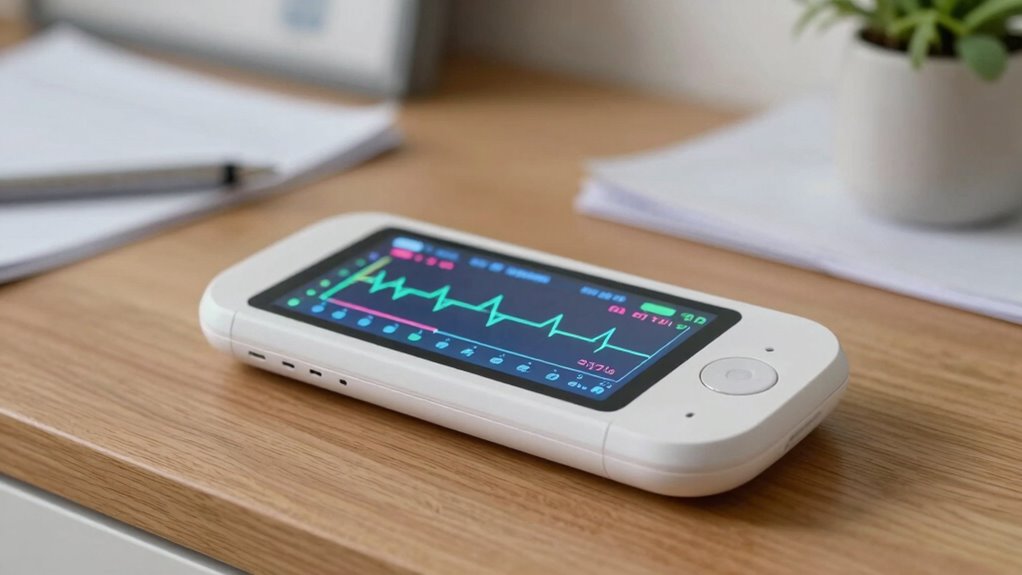
Irregular cycles make tracking fertility tricky because hormonal fluctuations and stress disrupt predictable patterns, making it hard to identify fertile windows or ovulation. Yet, fertility devices still help because they gather valuable data over time, monitoring subtle signs like temperature and heart rate. Algorithms analyze these signals to reveal hidden patterns and hormonal shifts. If you want to understand how technology can support you through cycle chaos, there’s more to discover ahead.
Key Takeaways
- Devices analyze subtle physiological signals to identify patterns despite cycle unpredictability.
- They track hormonal and body changes continuously, offering insights beyond manual methods.
- Algorithms interpret complex data, helping users understand their unique cycle variations.
- Tracking over time reveals hidden trends influenced by stress and lifestyle factors.
- They provide reassurance and support informed health decisions amid irregular cycle challenges.
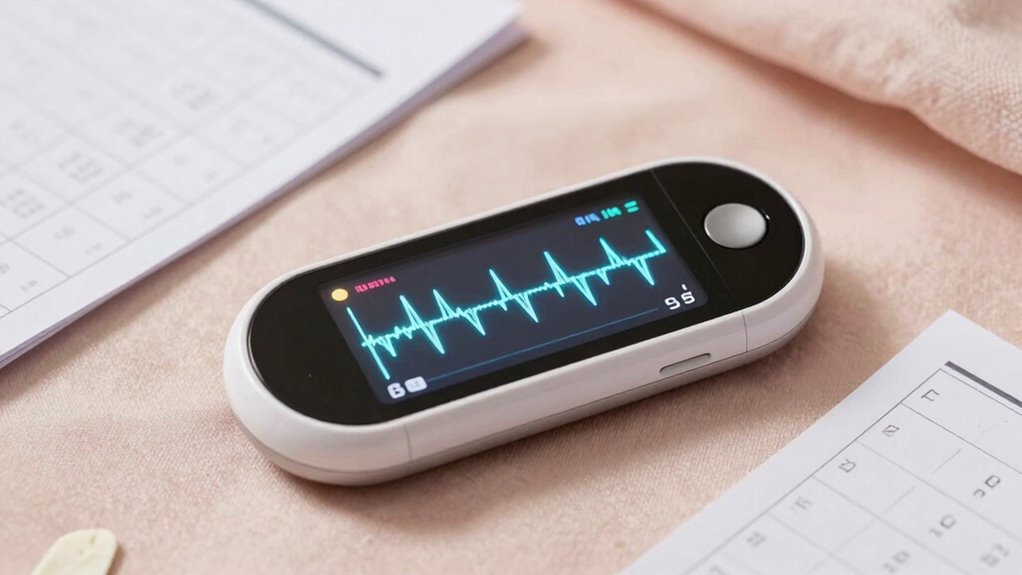
Irregular menstrual cycles can make tracking your fertility and health more challenging, but that doesn’t mean tracking is futile. When your cycles aren’t predictable, it’s harder to identify your fertile windows or anticipate ovulation, which can be frustrating if you’re trying to conceive or simply stay informed about your body. The main reason for this unpredictability often lies in hormonal fluctuations, which can be influenced by numerous factors, including stress impact. Stress can throw off your hormonal balance, leading to irregular ovulation and inconsistent cycle lengths. When stress levels are high, your body may produce more cortisol, which can interfere with reproductive hormones like estrogen and progesterone. These hormonal fluctuations make it difficult to rely on regular cycle patterns, complicating manual tracking or traditional methods.
Despite these challenges, fertility tracking devices still offer significant benefits. Even when cycles are irregular, these tools can help you gather valuable data over time. They monitor subtle changes in basal body temperature, heart rate, or hormone levels—data points that might be difficult to notice on your own. These devices often use algorithms to analyze patterns and provide insights into your unique cycle, even if it’s inconsistent. They can alert you to signs of ovulation or hormonal shifts, helping you understand your body’s signals without needing a perfectly predictable cycle. This can be especially useful if stress impact or hormonal fluctuations cause your cycle to be erratic, as the device can identify trends that are not immediately obvious.
Using these devices doesn’t mean you’re ignoring the effects of stress or hormonal fluctuations; rather, it means you’re leveraging technology to better understand their impact. Many users find that tracking with a device offers reassurance, especially when their cycles don’t follow a textbook pattern. It helps you see the bigger picture—how factors like stress, sleep, diet, or illness influence your cycle. Additionally, understanding hormonal fluctuations can help you recognize why your cycle might be irregular. Recognizing these factors can also assist in identifying patterns that might otherwise go unnoticed. Over time, this information can empower you to make more informed health decisions or discuss your cycle irregularities with a healthcare provider.
Furthermore, understanding biodiversity and environmental influences on your health can contribute to better management of stress and hormonal balance. While no device can completely eliminate the unpredictability caused by hormonal fluctuations or stress impact, they certainly increase your chances of recognizing patterns, managing expectations, and gaining a clearer picture of your reproductive health.

Mira Fertility Plus Tracking Monitor Kit, LH & E3G, 10 Wands
- Dual Hormone Testing: Tracks LH and E3G hormones
- High Accuracy: Up to 99.5% hormone detection accuracy
- Easy Home Use: Dip wand, insert, and get results in 21 minutes
As an affiliate, we earn on qualifying purchases.
As an affiliate, we earn on qualifying purchases.
Frequently Asked Questions
Can Irregular Cycles Predict Ovulation Accurately?
Irregular cycles can’t predict ovulation accurately because hormonal fluctuations cause ovulation unpredictability. When your cycle isn’t regular, it’s tough to pinpoint the exact fertile window. However, fertility tracking devices can help, as they monitor hormone levels, basal body temperature, or other signs, giving you a better idea of your ovulation. While not perfect, these devices improve your chances of identifying fertile days despite hormonal fluctuations.
Do All Fertility Apps Work With Irregular Periods?
Not all fertility apps work well with irregular periods. They often rely on cycle myths and fertility myths that assume regular cycles, making predictions less accurate for you. If your period varies, these apps might give misleading info. However, some advanced apps use symptom tracking and hormone data to improve accuracy. So, while they can help, don’t rely solely on them—consult a healthcare professional for personalized advice.
How Do Hormonal Changes Affect Cycle Tracking?
Hormonal fluctuations dance through your body, turning your cycle into a unpredictable melody. These shifts cause cycle variability, making it harder to predict ovulation or period dates. As hormones rise and fall, they warp the regular rhythm you might expect, but tracking devices still act like a steady metronome, helping you catch the beat amid the chaos. They provide clues, even when hormonal changes keep your cycle on its own wild, beautiful course.
Are There Specific Devices Better for Irregular Cycles?
Yes, some devices are better for irregular cycles because of their higher device accuracy and user-friendly experience. Look for fertility trackers that adapt to irregular patterns, offering personalized insights. These devices often use algorithms that analyze your data over time, improving accuracy. With an intuitive interface, they make tracking easier, even when your cycle varies. Choosing a device that prioritizes accuracy and user experience helps you stay on top of your cycle, regardless of irregularity.
How Long Should I Track to Understand My Pattern?
Think of your cycle as a mystery waiting to be unraveled. To understand your pattern, track for at least three to six months. This allows you to observe cycle variability and hormone fluctuations over time. The longer you track, the clearer your pattern becomes, helping you identify trends despite irregularities. Consistency is key, as patterns emerge gradually, giving you insight into your unique cycle rhythm.
Conclusion
Even if your cycles are irregular, tracking devices can still be a game-changer. Did you know that over 70% of users find these devices helpful in understanding their patterns? They can provide valuable insights, even when your cycle isn’t predictable. So, don’t give up on tracking—these tools can help you notice subtle changes and plan better, making it easier to manage your health. Keep exploring, and you might discover more about your body than you ever thought possible.