Pelvic floor trainers measure the strength and endurance of your pelvic muscles, using sensors to detect contractions and track your progress over time. They help you perform targeted exercises, improve muscle tone, and prevent issues like incontinence, prolapse, and sexual dysfunction. These devices are great for postpartum recovery, menopause, or anyone looking to enhance pelvic health. If you want to learn more about how they work and who benefits most, keep exploring.
Key Takeaways
- Pelvic floor trainers measure muscle strength, endurance, and engagement of pelvic muscles supporting bladder, uterus, and bowels.
- They provide real-time feedback to ensure correct exercises and track progress over time.
- Suitable for individuals postpartum, menopausal, or experiencing pelvic discomfort to improve pelvic health.
- They help identify muscle weaknesses and guide targeted, safe strengthening routines.
- Designed for users seeking evidence-based, personalized pelvic muscle training to prevent or manage conditions like incontinence and prolapse.
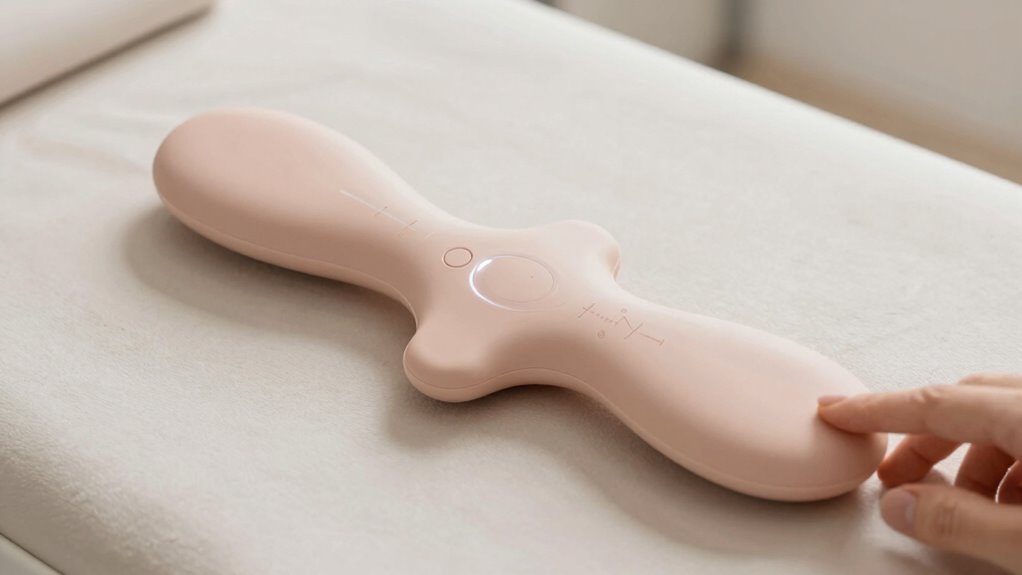
Pelvic floor trainers are devices designed to strengthen the muscles that support your bladder, uterus, and bowels. If you’re looking to improve your pelvic health, these trainers can be a valuable tool in your fitness routine. They work by encouraging you to perform kegel exercises more effectively, helping you target the specific muscles responsible for bladder control, sexual function, and core stability. Using a pelvic floor trainer can make your workouts more engaging and personalized, giving you real-time feedback on your progress.
Pelvic floor trainers enhance your exercises with real-time feedback, targeting muscles that support bladder, uterus, and bowels.
When you start using a pelvic floor trainer, it measures the strength and endurance of your pelvic muscles. These devices often have sensors that detect muscle contractions, providing data on how well you’re engaging and strengthening your pelvic floor. This measurement helps you understand your current level of pelvic health, identify weaknesses, and track improvements over time. Some trainers even offer guided exercises or feedback, making it easier to maintain a consistent routine and ensure you’re doing your kegel exercises correctly.
Knowing what your pelvic muscles can do is vital because weak pelvic support can lead to issues like urinary incontinence, pelvic organ prolapse, or decreased sexual satisfaction. By regularly using a pelvic floor trainer, you can build strength, improve muscle tone, and enhance your overall pelvic health. The device’s measurements also serve as motivation—seeing tangible progress can encourage you to stay committed to your routine.
Pelvic health isn’t just about preventing problems; it’s about feeling confident and comfortable in your body. If you’re postpartum, experiencing menopause, or dealing with pelvic discomfort, a pelvic floor trainer can be especially helpful. It guarantees you’re engaging the right muscles at the right intensity, which is essential for effective results. Additionally, these devices are designed to be user-friendly, often featuring apps or interfaces that guide you through exercises, remind you to train, and record your progress.
Understanding your muscle strength and endurance can help you choose the right training approach and avoid overexertion, which is crucial for safe and effective pelvic health improvement. You might wonder if a pelvic floor trainer is right for you. If you’re seeking a convenient, evidence-based way to improve your pelvic strength, it’s worth considering. Whether you want to optimize your pelvic health, recover from childbirth, or prevent future issues, these trainers can provide the feedback you need to make your exercises more effective. Ultimately, they empower you to take control of your pelvic wellness, ensuring that your muscles support your body’s core functions now and in the future.

Pelvic Floor Exercise Devices 35lb Resistance Kegel Thigh Trainer with Band
- Resistance Level: 35 lb resistance with 40 lb band
- Versatile Exercise: Targets thighs, glutes, arms, and more
- Durable Construction: Steel spring and high-quality materials
As an affiliate, we earn on qualifying purchases.
As an affiliate, we earn on qualifying purchases.
Frequently Asked Questions
How Accurate Are Pelvic Floor Trainers in Measuring Muscle Strength?
Pelvic floor trainers are generally quite accurate in measuring muscle strength, provided you maintain proper device calibration and consistent use. Your accuracy depends on how well you follow instructions and stay consistent with your workouts. If you calibrate the device correctly and use it regularly, it offers reliable feedback. Keep in mind that individual differences and proper technique also influence measurement accuracy, so stay attentive to form for the best results.
Can Pelvic Floor Trainers Be Used During Pregnancy?
Yes, you can use pelvic floor trainers during pregnancy as part of prenatal exercise. They help you strengthen pelvic muscles, supporting your pelvic health education and overall comfort. Just make sure to consult your healthcare provider before starting, especially during pregnancy. Using them correctly can improve your pelvic stability and prepare you for childbirth, making your prenatal journey smoother and more comfortable.
Are Pelvic Floor Trainers Suitable for Men?
Yes, pelvic floor trainers are suitable for men. You should consider gender-specific features and device compatibility when choosing one. Men often use these trainers to improve urinary control, pelvic strength, or recovery after surgery. Make sure the device is designed for male anatomy and check for features tailored to men’s needs. Proper use can enhance pelvic health and overall well-being, so select a trainer that matches your gender considerations.
How Often Should I Use a Pelvic Floor Trainer for Optimal Results?
You should aim to use your pelvic floor trainer about three to four times a week for ideal results. Consistent exercise frequency helps improve muscle strength and control. Keep user compliance high by sticking to a routine you can maintain long-term. Don’t overdo it—rest days are essential. Regular use, combined with proper technique, maximizes benefits and supports your pelvic health effectively.
Do Pelvic Floor Trainers Require Professional Supervision?
You don’t always need professional oversight when using a pelvic floor trainer, but it’s highly recommended for safety considerations. Consulting a healthcare professional ensures you’re using the device correctly and prevents injury or strain. While some trainers are user-friendly, professional guidance helps you target your specific needs effectively. For maximum results and safety, consider scheduling a consultation, especially if you have underlying health conditions or concerns about pelvic health.
Conclusion
Now that you know what pelvic floor trainers measure and who they’re for, you’re better equipped to take control of your health. Think of them as both your personal coach and your silent partner—guiding your progress while quietly monitoring your strength. Just like a mirror reflects your image, these trainers reflect your progress. So, embrace the journey, stay consistent, and watch how your confidence and well-being flourish—sometimes, the smallest tools make the biggest difference.