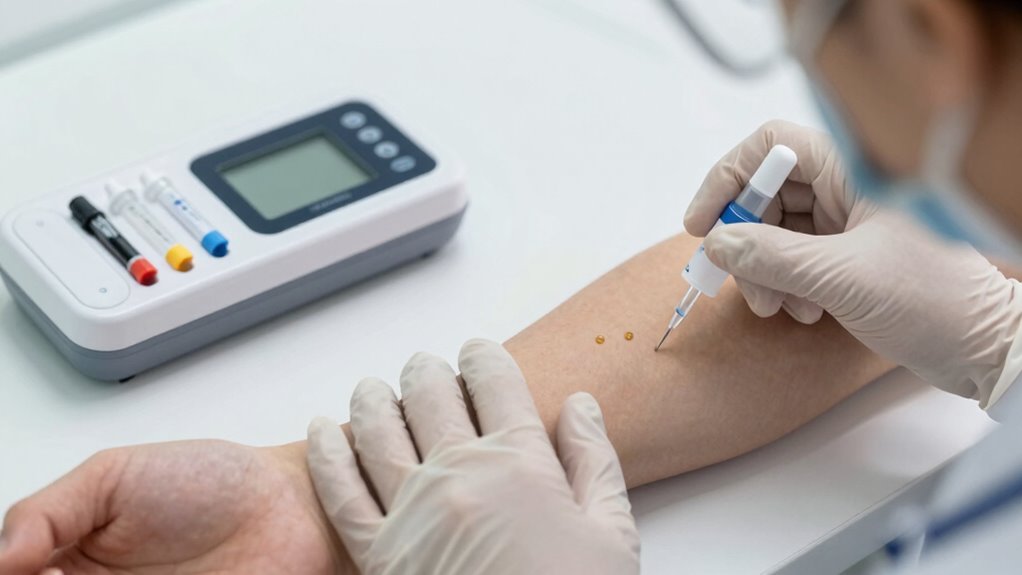

When deciding between skin prick and blood allergy tests, consider comfort and how quickly you want results. Skin prick tests involve placing small allergen amounts on your skin, showing reactions within 15 minutes—great for quick visuals, especially for kids. Blood tests measure specific antibodies in your blood and are ideal if skin conditions or medications interfere. Both options are effective; keep exploring to find out which suits your needs best.
Key Takeaways
- Skin prick tests involve placing allergens on the skin to observe immediate reactions, effective and quick, especially for children.
- Blood tests measure specific IgE antibodies in the bloodstream, useful when skin conditions or medications interfere with skin testing.
- Skin prick testing provides immediate visual results within 15 minutes, while blood tests require lab analysis and take several days.
- Blood tests are less invasive and preferable for individuals with eczema or skin sensitivities, whereas skin tests are more direct and cost-effective.
- Both methods are essential for accurate allergy diagnosis; choosing depends on age, skin condition, medication use, and patient comfort.
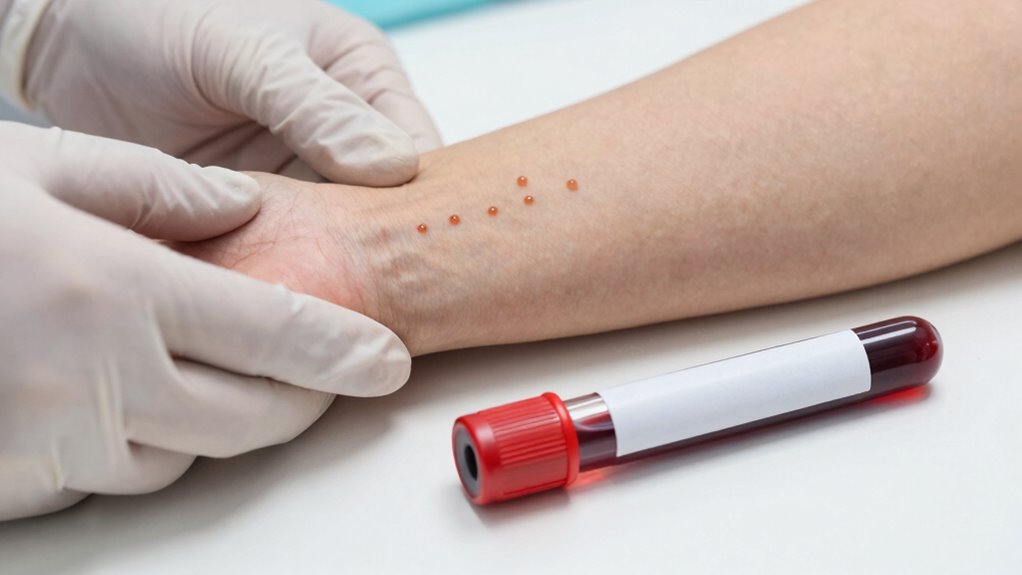
Allergy testing is a crucial step in identifying the specific substances that trigger your allergic reactions. If you’re concerned about your child’s allergies, understanding the different testing options is key to effective allergy management. Pediatric allergies can be challenging to diagnose because young children may not easily communicate their symptoms, making testing even more essential. By pinpointing the exact allergens, you can develop a targeted plan to reduce exposure and minimize reactions, improving your child’s quality of life.
When considering allergy testing, the two main methods are skin prick tests and blood tests. Skin prick testing involves placing small amounts of allergens on your skin, usually on the forearm or back, then gently pricking the skin so the allergen enters just below the surface. If you’re allergic to a substance, you’ll notice a raised, itchy bump within about 15 minutes. This method is quick, usually taking less than 30 minutes, and provides immediate results. It’s often preferred for children because it’s less invasive and provides a clear, visual indication of allergies. However, skin prick tests might not be suitable for everyone—if you have skin conditions like eczema or are on certain medications, your doctor might recommend blood testing instead.
Blood tests, such as the ImmunoCAP or specific IgE tests, measure the amount of allergy-causing antibodies in your bloodstream. A small blood sample is drawn and analyzed in a lab to determine your sensitivity to various allergens. These tests are especially useful if you have a skin condition that makes prick testing unreliable or if you’re on medications that could interfere with skin testing. Blood tests are generally more comfortable for children because they don’t involve pricking the skin, but they can take longer to process—results might take a few days. While they are less immediate, blood tests are highly accurate and can be useful when skin tests aren’t feasible. Additionally, understanding the role of filtration systems in allergy management can help reduce airborne allergens and improve overall symptom control.
Both testing methods play a significant role in allergy management, especially when dealing with pediatric allergies. Early and accurate diagnosis allows you to implement effective strategies—like allergen avoidance, medication, or immunotherapy—to prevent reactions and control symptoms. Whether you choose skin prick tests or blood tests, consulting with an allergist will help determine the best approach for your child. When you understand the differences, you can make informed decisions that lead to better allergy control and a healthier, more comfortable life for your little one.

5Strands Food Intolerance & Environmental Sensitivity Test for Adults & Children, 950 Items Tested, Kids Intolerance Testing Kit, at Home Gut Health Assessment, Fast 4 Day Results
- Identify Food Intolerances and Sensitivities: Detects gut and skin issues causes
- Tests 950 Items Including Foods and Environment: Includes 658 foods and 282 environmental items
- Simple 3-Step Testing Process: Register, collect hair, send sample
As an affiliate, we earn on qualifying purchases.
As an affiliate, we earn on qualifying purchases.
Frequently Asked Questions
How Long Does Each Allergy Test Take to Get Results?
You’ll typically see results within 15 to 30 minutes for skin prick tests, making the testing duration quick and convenient. Blood tests usually take longer, often 1 to 2 weeks, due to lab processing times. The result turnaround for skin tests is fast, so you get immediate insights, while blood tests require patience but are less invasive. Knowing this helps you plan accordingly for your allergy evaluation.
Can Allergy Tests Detect Food Intolerances?
You can’t rely solely on allergy tests to detect food intolerances, as they mainly identify immune responses, not sensitivities caused by enzyme deficiencies. Think of it as searching for a needle in a haystack—food sensitivity tests, like elimination diets, are better suited for pinpointing issues. These tests help identify symptoms linked to enzyme deficiencies, guiding you toward the right dietary adjustments for better digestion and comfort.
Are Allergy Tests Suitable for Children and Infants?
Yes, allergy tests are suitable for children and infants, but you should consider pediatric considerations and infant testing protocols. Doctors typically recommend skin prick tests for older children, while blood tests might be preferred for infants due to their sensitivity and safety. Always consult a healthcare professional to guarantee proper testing procedures, evaluation, and interpretation tailored specifically to your child’s age and health needs.
What Are the Risks or Side Effects of Allergy Testing?
Like stepping onto a stage, allergy tests can bring some discomfort, such as minor test discomfort or skin irritation, but serious risks are rare. Be aware of false positives, which might lead you to unnecessary treatments. While side effects are infrequent, consult your doctor if you notice swelling, severe itching, or dizziness afterward. Overall, allergy testing is safe, but staying informed helps you make the best decision.
How Accurate Are Skin Prick Tests Compared to Blood Tests?
Skin prick tests are generally more reliable than blood tests, providing quicker results and higher test reliability. However, they can sometimes yield false positives, indicating allergies you might not have. Blood tests are less likely to give false positives but may be less sensitive. Your healthcare provider can help determine which test suits your situation best, considering accuracy and potential for false positives.
Conclusion
Now that you know the differences between skin prick and blood tests, you’re better equipped to choose what’s right for you. Think of these tests as two paths leading to the same destination—relief from allergy symptoms. Whether you prefer the quick, direct approach or the blood test’s quiet accuracy, understanding your options helps you take control. So, take that first step confidently—your journey toward allergy relief starts with informed choices.