If you’re choosing between inline duct fans and window fans, inline models usually move larger volumes of air more efficiently and quietly over time, making them ideal for integrated ventilation systems. Window fans offer quick, flexible airflow but tend to use more energy and generate more noise, especially for long-term use. To find out which option is best for your needs and environment, explore the details below.
Key Takeaways
- Inline duct fans provide centralized, controlled airflow suitable for large spaces, while window fans offer quick, flexible airflow for smaller areas.
- Inline fans are generally more energy-efficient and quieter due to their placement within duct systems.
- Window fans can move air quickly but tend to be louder and less energy-efficient for sustained use.
- Properly calibrated inline duct fans can deliver consistent, high-volume airflow, often outperforming window fans in airflow capacity.
- The choice depends on the need for airflow control, energy efficiency, noise levels, and installation convenience.
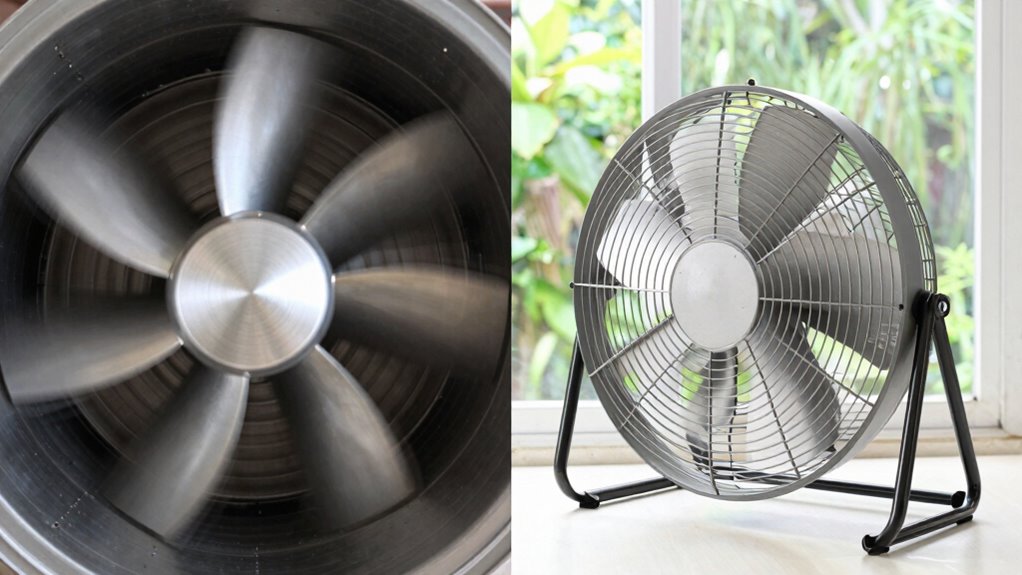
When choosing between inline duct fans and window fans, it’s important to understand how each option can impact your space’s ventilation. Both types move air effectively, but their differences influence energy efficiency and noise levels, which are essential factors in making the right choice. Inline duct fans are typically installed within your ductwork system, allowing for a more controlled and centralized airflow. Because they are connected directly to your ventilation system, they tend to operate with higher energy efficiency, consuming less power to move a significant volume of air. This efficiency can lead to reduced energy bills over time, especially if you need continuous ventilation. Additionally, inline duct fans are generally quieter during operation because their motors are housed within the duct system, away from living spaces. This means less ambient noise and a more peaceful environment, particularly important if you’re sensitive to sound or if the fan runs frequently. Proper calibration of these fans can further optimize their performance and ensure they work as efficiently as possible.
On the other hand, window fans are designed for quick installation and direct airflow. They are usually less energy-efficient because they often run at higher speeds to push or pull air directly through a window opening. If you’re concerned about energy consumption, window fans might not be the best choice for long-term use, especially if you keep them running for extended periods. Noise levels are another consideration; window fans tend to be noisier since the motor and blades are exposed and located right in your living space. You’ll notice the sound of the fan more directly, which can be disruptive or bothersome, particularly during nighttime or quiet hours. However, window fans offer immediate, flexible airflow and are easy to turn on or off without any installation hassle, making them ideal for temporary or occasional use.
Ultimately, your decision should consider how much you prioritize energy efficiency and noise levels. If you want a long-term, energy-conscious solution that runs quietly, inline duct fans often come out ahead. They may require a higher initial investment and more installation effort, but their efficiency and reduced noise make them a superior choice for consistent ventilation. Conversely, if you need a quick, affordable fix for occasional airflow, a window fan might suffice, even if it’s louder and less energy-efficient. Understanding these differences guarantees you choose the right fan for your specific needs, balancing performance with comfort and cost.
Frequently Asked Questions
Can Duct Fans Be Used Outdoors Effectively?
Yes, duct fans can be used outdoors effectively if they have outdoor durability and weather resistance. You should look for models specifically designed for outdoor use, as they feature sealed housings and corrosion-resistant materials. Proper installation and maintenance are essential to guarantee they withstand elements like rain, wind, and humidity. When chosen correctly, outdoor duct fans can efficiently move air in outdoor spaces without succumbing to weather-related damage.
Which Fan Type Is More Energy-Efficient Long-Term?
You’ll find inline duct fans are more energy-efficient long-term because they use less power to move air effectively, leading to energy savings over time. Window fans may seem cheaper initially, but their higher energy consumption results in increased long-term costs. By choosing an inline duct fan, you reduce your energy bills and benefit from consistent airflow, making it a smarter, more economical option for ongoing performance and savings.
How Does Noise Level Compare Between Them?
You’ll find that inline duct fans generally produce lower noise levels compared to window fans. Their sound comparison shows they operate more quietly, thanks to their enclosed design and quieter motors. Window fans, on the other hand, tend to be louder because of their open-air setup and less sound insulation. If noise is a priority, an inline duct fan offers a significant advantage, providing effective airflow with minimal sound disturbance.
Are There Safety Concerns With Window Fans?
You should be aware of safety concerns with window fans, especially regarding installation safety and electrical hazards. Improper installation can cause the fan to fall or let in drafts, while damaged cords or exposed wiring pose risks of electrical shock. Always secure the fan properly, avoid overloading outlets, and inspect for damage regularly. Following these precautions helps make certain safe operation and minimizes potential accidents.
Can These Fans Be Integrated With Home Automation Systems?
You can easily integrate these fans into your smart home system, transforming your space into an automated breeze. With automation compatibility, you’ll control airflow with a tap or voice command, making your home more comfortable and energy-efficient. Imagine opening your app and having your inline duct fan or window fan automatically activate when air quality drops or temperatures rise—seamless smart home integration that keeps your environment perfectly controlled.
Conclusion
In the battle of inline duct fans versus window fans, it’s clear that each has its own strengths. Think of inline duct fans as the silent heroes, quietly pushing air through your ducts, while window fans are the lively door-to-door salesmen, bringing fresh air directly in. Your choice depends on your needs—whether you want subtle efficiency or immediate airflow. Ultimately, selecting the right fan is like finding the perfect puzzle piece to complete your comfort.