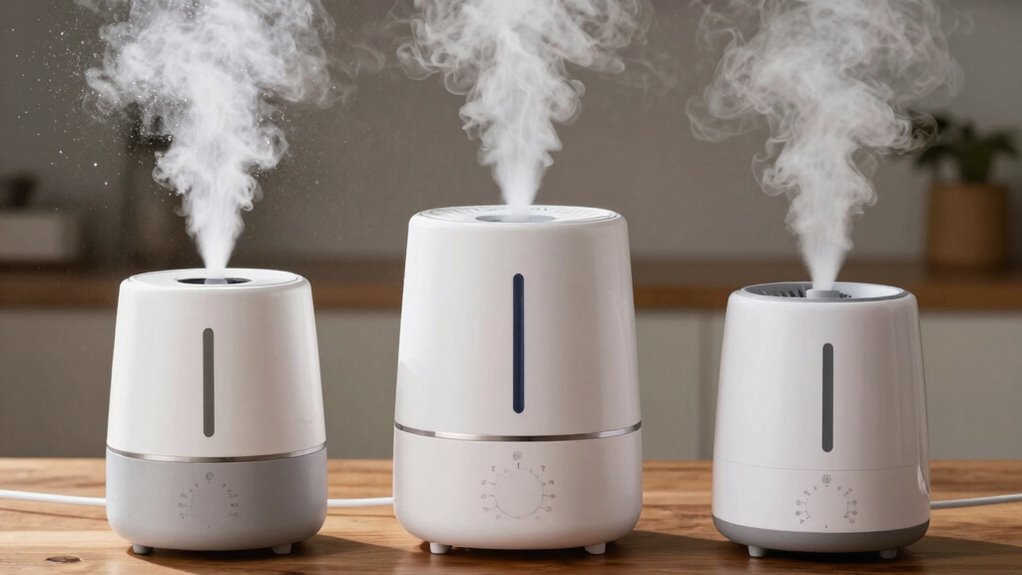
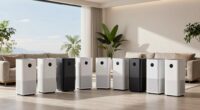
Ultrasonic humidifiers use high-frequency vibrations to produce a quiet, fine mist, making them energy-efficient and safe for households with children or pets. Evaporative models rely on a fan and a wick filter to add moisture naturally, helping prevent over-humidification. Steam humidifiers boil water to create sterile vapor, providing rapid, pure moisture. Understanding these differences can help you choose the best humidifier for your needs—keep exploring to learn more about each type.
Key Takeaways
- Ultrasonic humidifiers use high-frequency vibrations to produce a quiet, cool mist, while evaporative humidifiers use a fan and wick filter, and steam humidifiers boil water to create warm vapor.
- Ultrasonic models are energy-efficient and produce a fine mist without heat, whereas steam humidifiers require more energy to boil water, and evaporative units rely on natural evaporation.
- Ultrasonic humidifiers may disperse minerals from tap water, potentially affecting air quality; evaporative and steam humidifiers typically do not have this issue if water is properly filtered.
- Steam humidifiers generate warm mist through boiling, making them suitable for sterilization but potentially less safe for children; ultrasonic and evaporative models produce cool mist and are generally safer.
- Choice among these types depends on factors like noise preference, energy consumption, safety, and water quality considerations.

Humidifiers come in various types, each designed to suit different needs and preferences. When choosing the right one, you’ll want to deliberate how it impacts air quality improvement and energy efficiency. These factors directly influence how well a humidifier will perform in your space and how much it will cost to operate. Different humidifier types offer unique benefits and drawbacks, making it essential to understand their features before making a decision.
Ultrasonic humidifiers are popular because of their quiet operation and energy efficiency. They use high-frequency vibrations to create a fine mist, which is then released into the air. This process consumes less electricity than other types, making ultrasonic units cost-effective for long-term use. They’re excellent at improving air quality by adding moisture without introducing pollutants, especially if you use distilled water. Since they produce a cool mist, they don’t pose a burn risk, making them safe for households with children or pets. However, they can sometimes disperse minerals from tap water into the air, which may affect air quality unless you use filtered or distilled water. Additionally, the energy-efficient design of ultrasonic humidifiers contributes to lower energy consumption and reduced environmental impact.

Homvana 3.6L Top-Fill Cool Mist Humidifiers for Bedroom, Large Room & Plants, 23dB Ultra-Quiet, Easy-to-Clean 2-in-1 Baby Humidifier & Oil Diffuser for Congestion Relief, Lasts Up to 4 Nights (Grey)
- 3-in-1 Functionality: Humidifier, aromatherapy, mood light
- Ultra-Quiet Operation: Less than 23dB noise level
- Safe and Certified: BPA-free, auto shut-off for safety
As an affiliate, we earn on qualifying purchases.
As an affiliate, we earn on qualifying purchases.
Frequently Asked Questions
Which Humidifier Type Is Safest for Children and Pets?
You should choose an evaporative humidifier for children and pets, as it’s generally safer. Look for models with childproof features like secure lids and automatic shut-off. These humidifiers don’t produce hot steam, reducing burn risks around kids and pets. Additionally, verify it’s easy to clean to prevent mold. This way, you keep your little ones and furry friends safe while maintaining healthy humidity levels.
How Energy-Efficient Are Ultrasonic Versus Evaporative and Steam Models?
Ultrasonic humidifiers are generally more energy-efficient than evaporative and steam models, using less power to produce mist. While evaporative units rely on a fan and wick filter, consuming moderate energy, steam humidifiers use more power due to heating elements. You’ll notice ultrasonic models cost less to run, making them ideal if you’re focused on energy consumption and power efficiency.
Can Different Humidifier Types Help With Specific Health Conditions?
Different humidifier types can target specific health needs. If you struggle with respiratory relief, ultrasonic models produce fine mist that easily reaches your lungs, easing breathing issues. For skin hydration, evaporative humidifiers add moisture steadily, preventing dryness and irritation. Steam humidifiers, by boiling water, offer sterile vapor that’s beneficial if you’re prone to infections or allergy sensitivities. Choose based on your primary health concern for best comfort.
What Maintenance Is Required for Each Humidifier Type?
You need to regularly clean filters and follow descaling procedures for each humidifier type. For ultrasonic models, clean the water tank and replace filters as recommended. Evaporative units require filter cleaning and occasional wick replacement, while steam humidifiers need descaling to prevent mineral buildup. Doing this prevents mold, bacteria growth, and guarantees efficient operation, keeping your air healthy and your device functioning properly.
Are There Any Noise Differences Among Ultrasonic, Evaporative, and Steam Humidifiers?
You’ll notice noise levels vary among humidifier types. Ultrasonic models tend to be the quietest, producing minimal sound during operation, which makes them ideal for bedrooms. Evaporative humidifiers generate more noise due to the fan and wick, creating a gentle sound but louder than ultrasonic. Steam humidifiers usually produce the most noise because of the boiling water process, but their sound comparison remains manageable for most users.
Conclusion
Choosing the right humidifier is like picking the perfect paintbrush for your masterpiece; each type offers unique benefits. Ultrasonic models are quiet and energy-efficient, evaporative units are self-regulating, and steam humidifiers provide the purest mist. Consider your space and needs to find your ideal match. With the right humidifier, you’ll create a comfortable, balanced environment—your home’s fresh air, ready to refresh and rejuvenate.