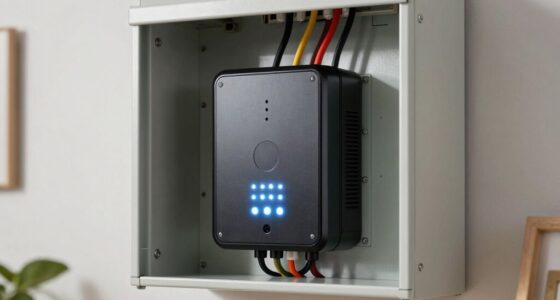
I always make sure to have GFCIs installed in kitchens, baths, and outdoor outlets because they protect against electrical shocks caused by water and moisture. These devices monitor for tiny current leaks and trip instantly to shut off power, preventing electrocution. Since they’re required by electrical codes in wet areas, it’s important to test them regularly for safety. Keep going to learn how proper GFCI use keeps you safe and complies with regulations.
Key Takeaways
- GFCIs detect small current leaks and shut off power quickly to prevent electrical shocks in moisture-prone areas.
- They are required by electrical codes for kitchens, bathrooms, and outdoor outlets to ensure safety.
- GFCIs continuously monitor circuits and trip within milliseconds if imbalance is detected, providing rapid hazard response.
- Proper installation and regular testing of GFCIs are essential for reliable protection in water-related environments.
- GFCIs complement traditional circuit breakers by offering additional safety against ground faults in wet areas.

Ground Fault Circuit Interrupters (GFCIs) are essential safety devices that protect us from electrical shocks, especially in areas prone to moisture like kitchens, bathrooms, and outdoor spaces. When I think about electrical safety, I realize how crucial it is to have proper ground fault protection in these environments. GFCIs are designed to detect tiny imbalances in the electrical current flowing through a circuit. If the device senses even a small leak—say, from a faulty appliance or a wet hand touching a live wire—it quickly shuts off power, preventing potential shocks or electrocution. This rapid response makes GFCIs a vital part of any safety device installation in areas where water and electricity might meet.
Installing GFCIs isn’t just a matter of convenience; it’s a vital safety step. Many homes still lack these devices in key areas, leaving residents vulnerable to electrical hazards. When I talk about safety device installation, I emphasize how straightforward it can be for a qualified electrician, but it’s equally important for homeowners to understand why these devices are necessary. In kitchens and bathrooms, where sinks, tubs, and appliances often create moist conditions, GFCIs are mandated by electrical codes because they reduce the risk of shock dramatically. Outdoors, where weather and water exposure are unpredictable, GFCIs protect outdoor outlets, power tools, and lighting fixtures. Without these devices, a simple splash or accidental contact with a live wire could lead to serious injury.
The beauty of GFCIs lies in their simplicity and reliability. They continuously monitor the flow of electricity and trip instantly when an imbalance is detected—often within milliseconds. This quick action is what sets ground fault protection apart from traditional circuit breakers, which mainly safeguard against overloads and short circuits but not ground faults. Proper safety device installation ensures these GFCIs function correctly, providing peace of mind. I always recommend checking GFCI outlets regularly—pressing the test button to confirm they trip and then resetting them to ensure they’re working properly.

Klein Tools RT250 GFCI Outlet Tester with LCD Display, Electric Voltage Tester for Standard 3-Wire 120V Electrical Receptacles
- LCD Display: Large backlit LCD for easy reading
- Trip Time Monitoring: Displays GFCI trip time for troubleshooting
- Wiring Fault Detection: Identifies common wiring issues
As an affiliate, we earn on qualifying purchases.
As an affiliate, we earn on qualifying purchases.
Frequently Asked Questions
How Do GFCIS Detect Ground Faults?
GFCIs detect ground faults through ground fault detection technology by monitoring the current flowing through hot and neutral wires. If there’s any imbalance, meaning current leaks to the ground, the GFCI quickly triggers circuit interruption to prevent electric shock. This rapid response, usually within milliseconds, guarantees safety by cutting off power instantly when a ground fault is detected, protecting you from potential hazards.
Can GFCIS Be Used With Extension Cords?
Think of GFCIs as your home’s safety gatekeeper, and yes, they can be used with extension cords. Just remember, extension cord safety is key—use only cords rated for outdoor or indoor use, depending on your needs. When installing GFCIs with extension cords, follow GFCI installation tips carefully: keep connections dry, avoid daisy-chaining, and make sure the GFCI is properly grounded. This keeps you protected wherever you work or play.
What Maintenance Do GFCIS Require?
I regularly check my GFCIs for proper ground fault testing to make certain they’re functioning correctly. They generally require minimal maintenance, but it’s important to test them monthly and replace them if they trip frequently or show signs of wear. The GFCI lifespan varies, but with proper care, they can last around 10-15 years. Staying on top of testing helps keep my home safe from electrical shocks.
Are GFCIS Necessary in All Outdoor Outlets?
Yes, GFCIs are necessary in all outdoor outlets. They protect you during outdoor activities like watering the garden or using outdoor lighting by shutting off power if they detect a ground fault. This safety feature prevents electric shocks, especially when water is involved. I always make sure outdoor outlets have GFCIs installed and tested regularly, ensuring safe and worry-free gardening, lighting, and outdoor fun.
How Do I Reset a Tripped GFCI?
Did you know that around 50% of electrical shocks happen in outdoor settings? To reset a tripped GFCI, first locate the device, then press the reset button firmly until it clicks. Before doing that, it’s a good idea to perform a ground fault testing to guarantee safety. Proper GFCI installation is vital for protection, so if it trips repeatedly, consider consulting an electrician for a thorough check.
Conclusion
I’ve always believed GFCIs are just a safety feature, but recent studies suggest they might also prevent subtle electrical faults that could cause long-term damage or fire. It turns out, their true value goes beyond immediate shock prevention—adding a layer of protection that’s both practical and scientifically supported. So, installing GFCIs isn’t just about compliance; it’s about embracing a smarter, safer approach to managing electricity in our homes and outdoors.