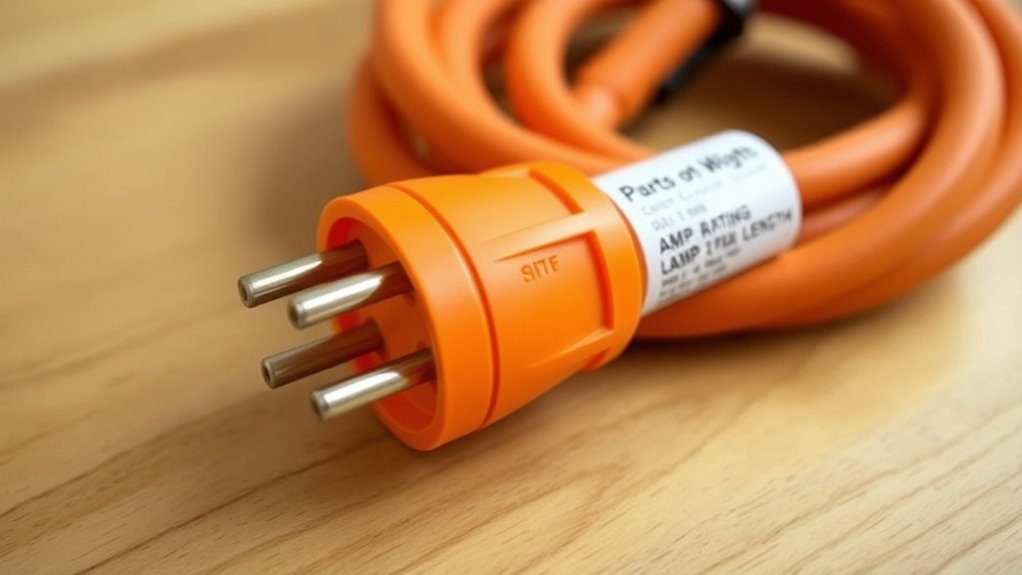

When choosing an extension cord, I always check the amp rating to make certain it can handle my device’s power needs—using one with too low a rating can cause overheating or fires. I also consider the length; longer cords cause voltage drops, so I opt for a thicker gauge wire for extended distances. Plus, I watch for heat buildup, which signals overload. Understanding these safety tips helps me stay safe, and there’s more to discover if you keep going.
Key Takeaways
- Match the extension cord’s amp rating to your device’s power needs to prevent overheating and electrical hazards.
- Use appropriately gauged cords for longer lengths to reduce voltage drops and overheating risks.
- Avoid overloading cords by not exceeding their maximum amp capacity, especially with high-power tools.
- Select outdoor-rated cords for outdoor use to withstand weather conditions and avoid safety issues.
- Regularly inspect cords for damage or wear and replace any that show signs of fraying, cuts, or exposed wires.
Extension cords are incredibly useful, but if not used properly, they can pose serious safety risks. One of the first things to contemplate is whether you’re using the right type of cord for your environment. Indoor versus outdoor cords are designed differently, and choosing the wrong one can lead to hazards. Indoor cords are typically lighter and less rugged, without the heavy insulation needed to withstand moisture or rough surfaces. Outdoor cords, however, are built tougher with weather-resistant insulation to handle moisture, UV rays, and temperature extremes. Using an indoor cord outside can cause electrical shorts or shocks, while an outdoor cord used indoors might not be flexible enough or may wear out faster.
When selecting an extension cord, always pay attention to its amp rating. This rating indicates how much current the cord can safely handle. Overloading a cord by connecting devices that draw more power than it’s rated for is dangerous and can lead to overheating or fires. I always check the amp rating and ensure it matches or exceeds the demands of my devices. For example, heavy-duty power tools require a cord with a higher amp capacity, while simple household gadgets need less. Remember, a cord’s length also plays a role; longer cords tend to have higher resistance, which can cause voltage drops and generate heat. If I need a long extension, I prefer one with a thicker gauge wire, which can handle the current more efficiently and reduce heat buildup.
Heat is another critical factor. When a cord gets warm or hot, it’s a sign that it’s overloaded or not suitable for the task. Overheating can melt insulation or cause sparks, leading to fires. I always avoid daisy-chaining multiple extension cords together. Instead, I use a single, properly rated cord of appropriate length. Proper cord storage tips also help prevent damage and safety hazards. After use, I neatly coil cords without tight bends or kinks, store them in a dry, cool place, and keep them away from heavy objects or sharp edges. Regularly inspecting cords for cuts, frays, or exposed wires is essential. Damaged cords should be discarded or replaced immediately to prevent accidents. Additionally, understanding the amp ratings and quality of the cords ensures safe operation and reduces the risk of heat buildup and electrical failures.

POWGRN 100 FT 12/3 Outdoor Extension Cord Waterproof, Heavy Duty Power Cord
- Maximum Wattage: Up to 1875W for heavy-duty use
- Length and Gauge: 100ft, 12/3 gauge outdoor cord
- Power Compatibility: 15 Amp, 125 Volt, 3-prong
As an affiliate, we earn on qualifying purchases.
As an affiliate, we earn on qualifying purchases.
Frequently Asked Questions
Can Extension Cords Be Used Outdoors Safely?
Yes, extension cords can be used outdoors safely if you follow weatherproofing tips and choose the right outdoor cord types. I always make sure to select cords rated for outdoor use, which are designed to withstand moisture and temperature changes. Additionally, I keep connections off the ground and avoid overloading the cord. Properly selecting and maintaining outdoor extension cords guarantees safety and reliable power for your outdoor projects.
How Often Should I Replace an Old Extension Cord?
Like a worn-out tire, an old extension cord loses its grip on safety. I recommend replacing it every 3-5 years, or sooner if you notice damaged insulation or reduced cord durability. Over time, insulation quality can deteriorate, increasing risks of shorts or fires. Regularly check for cracks or frayed wires, and don’t hesitate to swap it out to keep your electrical connections safe and reliable.
Are There Specific Cords for High-Power Tools?
Yes, there are specific power tool cords designed for high-power tools. I always look for cords with high amp ratings because they can handle the greater electrical load safely. These cords are usually thicker and more durable, preventing overheating during heavy use. If you’re working with high-power tools, make sure to choose cords rated for higher amps to guarantee safety and peak performance.
What Signs Indicate an Extension Cord Is Overheating?
If an extension cord is overheating, you’ll notice the cord insulation feeling hot to touch or even melting. You might see the plug damage, such as charring or discoloration, which indicates excessive heat. Sometimes, a burning smell comes from the cord. I always check for these signs because overheating can be dangerous, and replacing a damaged cord promptly keeps you safe while using high-power tools or appliances.
Can Multiple Extension Cords Be Connected Safely?
Connecting multiple extension cords is like stacking fragile glass; it risks overload and heat buildup. For safe power strip use, avoid daisy-chaining cords. Instead, use a single, appropriately rated extension cord. Remember, good cord storage techniques prevent damage that could lead to shorts or overheating. Always prioritize power strip safety by checking amp ratings and avoiding excessive length, ensuring your setup stays cool and secure.
Conclusion
Remember, choosing the right extension cord is like selecting a trusted partner—one that safely carries your power without overheating or breaking down. Picture a sturdy, well-rated cord snaking across your space, glowing softly with energy, never sparking or overheating. By paying attention to amp ratings, length, and heat, you guarantee your home stays safe and your devices stay powered. Trust in proper extension cord safety, and let your tasks flow smoothly and securely.