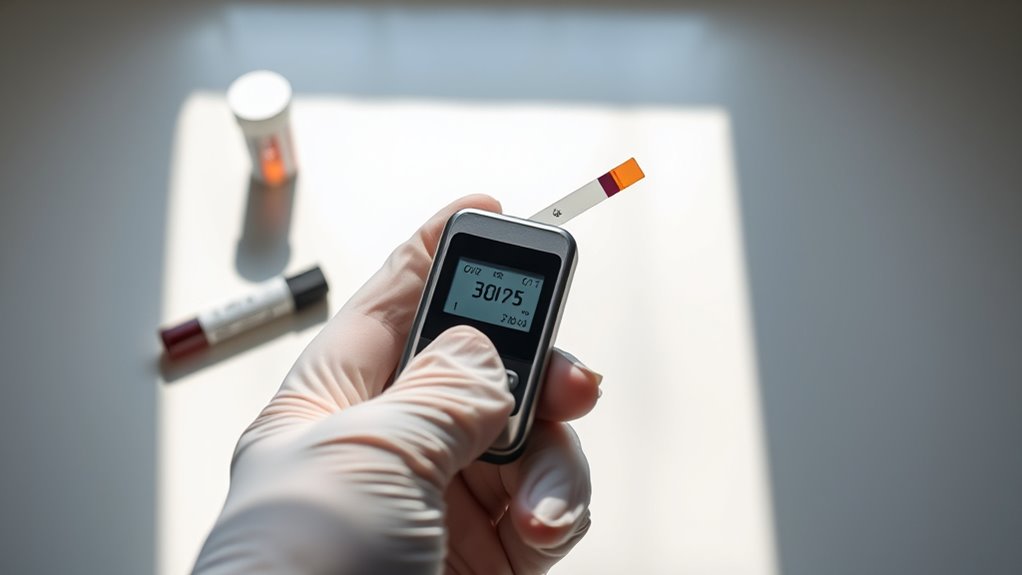

To check ketosis with blood ketone testing, I recommend testing in the morning after an overnight fast to confirm you’re in fat-burning mode. You can also test before meals or exercise to see how your body responds. Using a blood ketone meter with compatible strips, just prick your finger, apply a small blood drop, and wait for results—usually within seconds. If you keep exploring, you’ll discover even more tips to optimize your ketone levels and health.
Key Takeaways
- Test blood ketone levels in the morning after fasting or before meals for accurate ketosis assessment.
- Use a lancet to prick your finger, then apply a blood drop to the testing strip for measurement.
- Insert the strip into the ketone meter and wait a few seconds for the reading.
- Regular testing helps monitor ketosis trends and effectiveness of dietary or fasting adjustments.
- Conduct tests during dietary changes or before workouts to evaluate metabolic response and ketosis status.
Have you ever wondered how to accurately measure your body’s ketone levels? If you’re on a ketogenic diet or trying to monitor ketosis for health reasons, understanding your ketone levels is essential. The most reliable method is blood ketone testing, which involves using a ketone meter and testing strips. Unlike breath or urine tests, blood testing provides precise, real-time data about your ketone concentration, giving you clearer insight into whether you’re in ketosis, approaching it, or falling out of it.
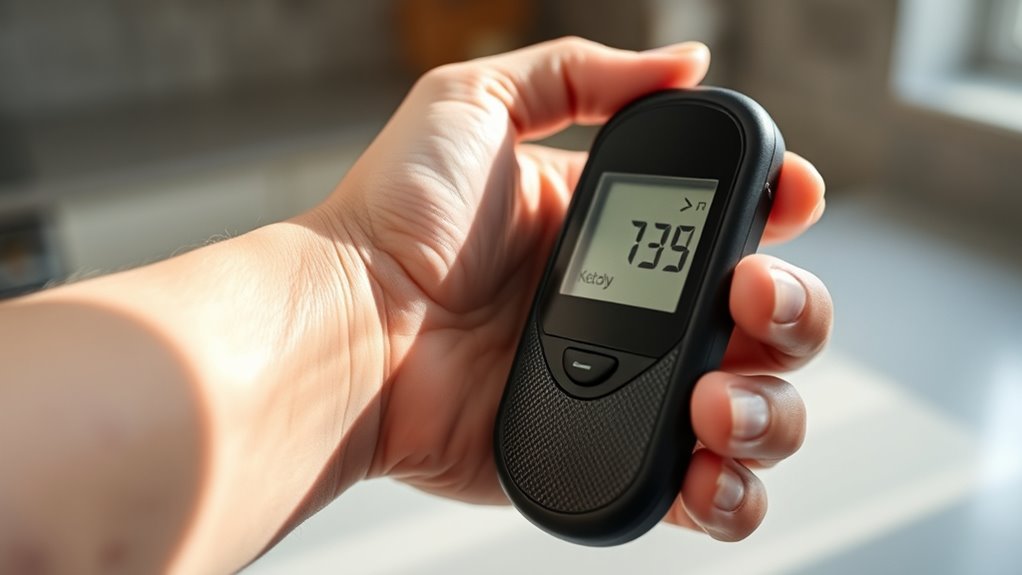
Using a ketone meter is straightforward but requires some attention to detail. First, you’ll need a reliable device designed specifically for blood ketone measurement. These meters are compact and easy to operate—just like a glucose meter, but calibrated for ketones. To get an accurate reading, you’ll need testing strips compatible with your meter. These strips are coated with chemicals that react with beta-hydroxybutyrate, the primary ketone body measured in blood. When you insert a test strip into the meter, it’s ready to analyze a small blood sample.
A reliable blood ketone meter is compact, easy to use, and requires compatible testing strips for accurate results.
The process involves pricking your finger with a lancet to draw a tiny drop of blood, then applying that blood to the testing strip. The strip absorbs the blood and the meter quickly analyzes it, displaying your ketone level on the screen within seconds. It’s a simple, minimally invasive process that you can do anywhere, anytime. The key is consistency: testing at the same time each day, preferably in the morning or before meals, helps you track trends rather than isolated numbers.
Knowing when to test is just as important as how to do it. Many people check their ketones in the morning, after fasting overnight, to see if they’ve entered ketosis. Others test before workouts or during times of dietary change to gauge how their body responds. If you’re trying to reach a specific ketone level, such as for therapeutic reasons, regular testing helps you adjust your diet or fasting periods accordingly. Also, testing when you feel you’re not in ketosis can help identify dietary or lifestyle adjustments needed. Incorporating air purification can support overall health and well-being, potentially influencing your metabolic state.

Simple HealthKit At-Home Men’s Total Testosterone Test - Measures Total T Level for Males - Hormone Testing Sample Collection Kit - Fast Lab Results
- Test Type: Men's Total Testosterone Test
- Ease of Use: Simple, private home testing
- Sample Collection: Blood sample via at-home kit
As an affiliate, we earn on qualifying purchases.
Frequently Asked Questions
Can Blood Ketone Levels Indicate Overall Nutritional Status?
Blood ketone levels can give some insight into your metabolic state, acting as metabolic indicators. However, they don’t fully reflect your overall nutritional status because nutritional markers like vitamins, minerals, and protein levels are also essential. I recommend using blood ketone testing alongside other assessments to get a complete picture of your health. Remember, ketosis is just one piece of the nutritional puzzle.
How Often Should I Test My Blood Ketones Daily?
Think of your blood ketone levels as a compass guiding your keto journey. I recommend daily testing, especially during the initial phase, to chart your course effectively. Focus on ideal testing times like early morning or after meals to get accurate readings. Consistent frequency monitoring helps you understand how your body responds, making adjustments smoother. Remember, regular checks are your map to stay on course toward your health goals.
Are Blood Ketone Levels Affected by Hydration?
Hydration impact can influence blood ketone levels because fluid balance affects blood concentration. When you’re well-hydrated, your blood volume increases, which may dilute ketones and slightly lower their readings. Conversely, dehydration can concentrate ketones, making levels appear higher. That’s why maintaining consistent hydration is essential for accurate blood ketone testing and tracking ketosis accurately. Always drink enough fluids to keep your fluid balance stable before testing.
Do Different Brands of Testing Kits Yield Consistent Results?
Different brands of testing kits can yield slightly varying results, so testing kit accuracy is essential. I recommend comparing brands to see which one provides the most consistent readings for you. While some variation exists, most reputable brands are reliable if used correctly. Always follow the instructions carefully, and consider sticking with one brand for more accurate trend tracking. This helps guarantee you’re accurately monitoring your ketosis levels.
Can Blood Ketone Testing Predict Upcoming Hypoglycemia?
Blood ketone testing isn’t a reliable way to predict upcoming hypoglycemia because ketone fluctuations don’t directly indicate blood sugar drops. While monitoring ketones helps track ketosis levels, hypoglycemia prediction relies more on blood glucose trends and symptoms. I recommend combining regular blood sugar checks with awareness of your body’s signals, rather than depending solely on ketone readings, to better anticipate and prevent hypoglycemia.
Conclusion
If you’re curious about ketosis, testing your blood ketones is a straightforward way to stay on track. Remember, studies show that over 60% of people on a low-carb diet experience improved energy levels, partly thanks to monitoring their ketone levels. By checking your blood ketones regularly, you can fine-tune your approach and feel confident you’re making progress. It’s a simple step that can make a big difference in reaching your health goals.