If I suspect celiac disease, I know testing starts with a TTG-IgA blood test to check for immune response to gluten, but I have to keep eating gluten before the test for accurate results. If results suggest celiac, an endoscopy with a biopsy confirms the diagnosis by examining tiny intestinal tissue samples. Sometimes, if the results are unclear, a gluten challenge may be needed. Keep going to find out more about these important steps.

Get oils, diffusers and self-care delivered free with Prime
- Fast, free delivery on millions of items
- Prime Video, Amazon Music and more included
- Member-only deals all year
Key Takeaways
- TTG-IgA blood test is the initial screening for celiac disease, indicating immune response to gluten.
- An endoscopy with biopsy confirms celiac by revealing small intestinal damage.
- Gluten challenge involves reintroducing gluten when tests are inconclusive to observe antibody or symptom changes.
- Proper testing requires maintaining gluten intake before blood tests and avoiding premature gluten elimination.
- Additional antibody tests and medical guidance are essential for accurate diagnosis and appropriate treatment.
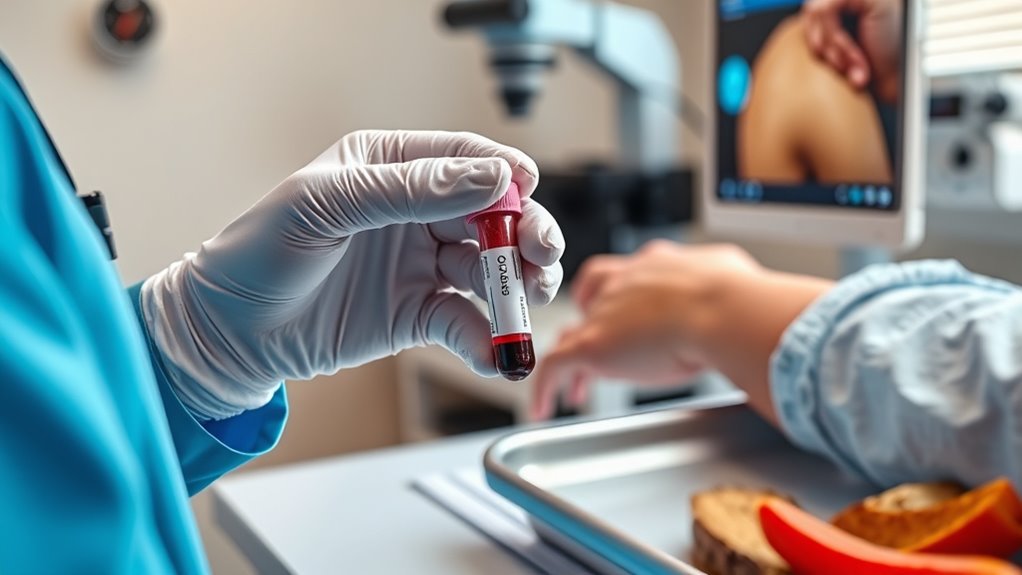
If you suspect you might have celiac disease, getting tested is an essential first step. Many people confuse gluten sensitivity with celiac disease, but they’re quite different. Gluten sensitivity doesn’t involve an autoimmune response, whereas celiac triggers your immune system to attack your small intestine when gluten is present. Recognizing these differences is vital because celiac disease requires specific testing and management. If you’ve experienced persistent digestive issues, fatigue, or unexplained symptoms, it’s wise to seek medical advice and get tested before making any dietary changes.
One of the initial tests your doctor might recommend is the TTG-IgA blood test. This test looks for antibodies called tissue transglutaminase IgA, which are produced when your immune system reacts to gluten. A positive result suggests an autoimmune response typical of celiac disease, but it’s not definitive on its own. That’s why your doctor might follow up with other tests or procedures. It’s important to maintain your usual gluten intake before testing because avoiding gluten can lead to false negatives, making diagnosis more difficult.
If the TTG-IgA test indicates celiac disease, the next step often involves an endoscopy with a biopsy of your small intestine. During this procedure, a small tube with a camera is inserted through your mouth to examine your intestinal lining. The doctor takes tiny tissue samples to look for damage characteristic of celiac disease, such as villous atrophy. This damage occurs because of the autoimmune response triggered by gluten, which can cause long-term complications if left untreated. The biopsy provides concrete evidence, confirming whether your immune system’s response to gluten has damaged your small intestine.
In some cases, if the blood tests are inconclusive, your doctor might recommend a gluten challenge. This involves consuming gluten for a set period to see if symptoms reappear or if antibody levels rise. This step can help clarify uncertain cases but should be done under medical supervision because it may cause discomfort or flare-up of symptoms. It’s essential to follow your healthcare provider’s guidance during this process to avoid unnecessary suffering and to ensure accurate results. Additionally, understanding the role of specific antibody testing can help interpret your test outcomes more effectively.
Frequently Asked Questions
Can Celiac Disease Develop Suddenly in Adulthood?
Yes, celiac disease can develop suddenly in adulthood. I’ve seen cases where symptoms appear unexpectedly, often after stressful events or illness, which can trigger adult-onset celiac. While it’s more common to develop gradually, some people experience a rapid onset of symptoms. If you notice sudden digestive issues or other related signs, it’s important to get tested, as celiac disease can sometimes catch you off guard with its symptom suddenness.
Are There Any False Positives in Ttg-Iga Testing?
False positives can occur with TTG-IgA testing, so it’s not 100% accurate. I always remind patients that while the test is highly sensitive, other conditions or factors like IgA deficiency can lead to false positives. That’s why test accuracy depends on proper interpretation, and doctors often recommend follow-up tests or an endoscopy to confirm celiac disease. Always discuss results thoroughly with your healthcare provider.
How Long Should I Stay on a Gluten-Free Diet Before Testing?
I recommend staying on a gluten-free diet for at least 4 to 6 weeks before testing. This gluten-free duration guarantees that the TTG-IgA levels accurately reflect your immune response, reducing false negatives. If you’ve been eating gluten regularly, your tests are more likely to detect celiac disease. Don’t change your diet suddenly before testing; consistent gluten intake is key for accurate results.
Is Genetic Testing Necessary for Celiac Disease Diagnosis?
You bet genetic testing isn’t always necessary for diagnosing celiac disease, but it can be a game-changer in disease prediction! I’ve found that it helps rule out celiac quickly, especially if symptoms are unclear. While not mandatory, genetic tests like HLA-DQ2 and DQ8 can provide peace of mind and guide further testing. If you have a family history, I’d definitely recommend considering it.
Can Children Be Tested for Celiac Disease?
Yes, children can definitely be tested for celiac disease. I recommend pediatric screening, especially if they show symptoms like stomach pain, diarrhea, or growth issues. Symptom assessment is vital, and doctors often use blood tests like TTG-IgA to help diagnose. If results are positive, an endoscopy might be needed. Early testing helps manage the condition effectively and prevents complications later on.
Conclusion
Remember, the proof is in the pudding — or in this case, in your gut health. Getting tested for celiac disease involves more than just one step; it’s a journey of accurate diagnosis with TTG-IGA, endoscopy, and possibly a gluten challenge. Don’t ignore symptoms or delay testing. Early detection can make all the difference, so trust your instincts and seek guidance. After all, prevention is better than cure, and your health is worth it.
Halloween Picks
halloween
As an affiliate, we earn on qualifying purchases.