
When beef goes bad, it emits a strong, unpleasant odor that you can't ignore. You'll notice sour, putrid smells reminiscent of rotten eggs or spoiled milk. These odors come from spoilage bacteria and compounds like cadaverine and putrescine. If the beef has been improperly stored, especially in warm conditions, the stench intensifies. A faint smell might creep in as it approaches its expiration, but strong, foul odors are definite red flags that it's time to discard it. Trust your senses because spoiled meat can pose serious health risks. There's more to uncover about keeping your beef fresh and safe.
Key Takeaways
- Spoiled beef emits strong, unpleasant odors, often described as sour, putrid, or resembling rotten eggs.
- The presence of ammonia-like scents indicates significant spoilage and bacterial growth.
- Fresh beef has a neutral smell, whereas spoiled beef's odor becomes increasingly foul over time.
- Trust your senses; strong or lingering odors are clear signs of spoiled beef.
- Proper storage and handling are crucial to minimize the risk of spoilage and associated health risks.

Air Purifier for Home Bedroom Large Room 2200 Ft², MOOKA H13 HEPA Air Cleaner with Washable Pre-filter, Air Quality Monitor, Air Purifiers for Pets Hair Smoke Dust Pollen, Auto Mode, KJ190 White
𝐇𝐢𝐠𝐡𝐞𝐫 𝐀𝐢𝐫 𝐈𝐧𝐭𝐚𝐤𝐞 & 𝐋𝐚𝐫𝐠𝐞𝐫 𝐂𝐨𝐯𝐞𝐫𝐚𝐠𝐞 𝐟𝐨𝐫 𝐏𝐞𝐭 𝐋𝐨𝐯𝐞𝐫𝐬: This air purifier for home pets is designed with...
As an affiliate, we earn on qualifying purchases.
Introduction
When you're handling ground beef, knowing how to identify its freshness is crucial for your health. Fresh ground beef should have a neutral smell, sometimes with a faint iron scent. If you notice any signs of spoilage, it's vital to act quickly. Spoiled beef typically gives off a strong, putrid odor that can remind you of rotten eggs or sour milk. This unpleasant smell indicates the presence of bacteria, which produce foul-smelling compounds like cadaverine and putrescine as the meat deteriorates.
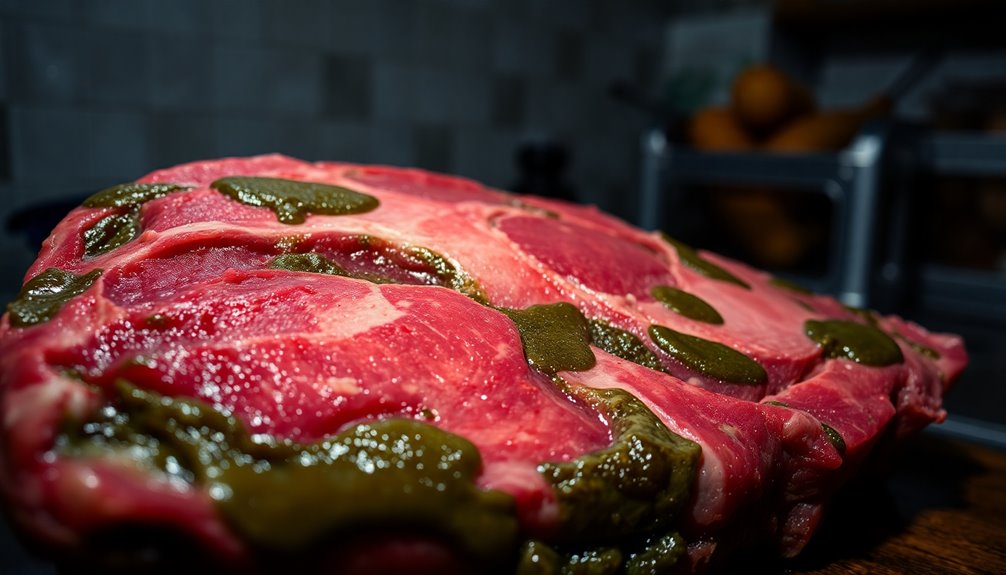
If the beef emits an overpowering odor upon opening the package, it's a clear sign that it's no longer safe to consume. Relying solely on smell isn't enough; you should also perform visual and textural checks. Fresh ground beef will have a bright red color and a firm texture, while spoiled beef may appear grayish or slimy. If you detect any sour smell or unusual odor, it's best to throw it away. Prioritizing food safety by understanding these signs of spoilage can help prevent foodborne illnesses and keep your meals safe and enjoyable.

LEVOIT Air Purifier for Home Allergies Pet Hair in Bedroom, Covers Up to 1073 ft² by 56W High Torque Motor, AHAM VERIFIDE, 3-in-1 Filter with HEPA Sleep Mode, Remove Dust Smoke Odor, Core300-P, White
WHY CHOOSE AHAM VERIFIDE AIR PURIFIERS: AHAM (Association of Home Appliance Manufacturers) is an ANSI-accredited organization that sets...
As an affiliate, we earn on qualifying purchases.
Description of the Smell
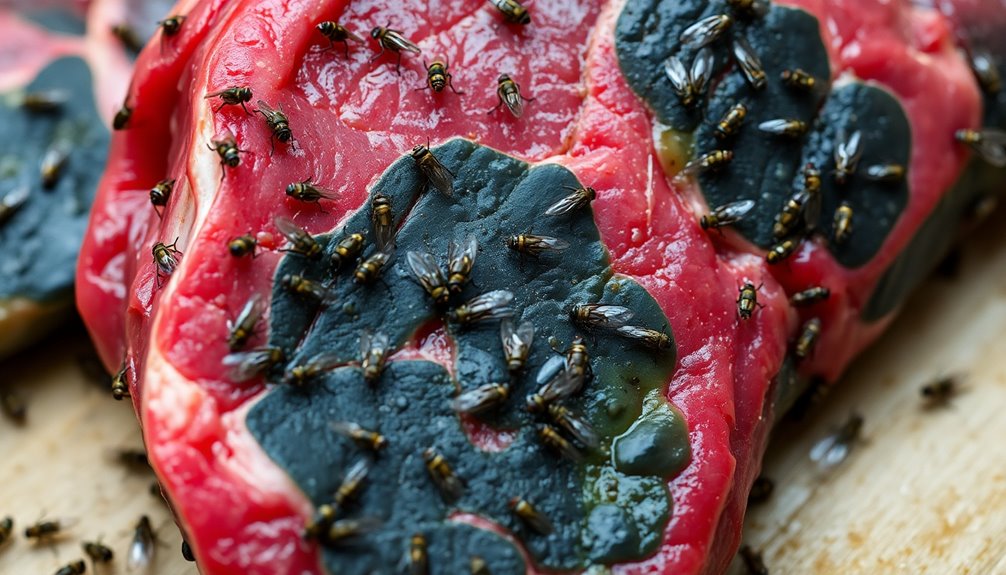
The smell of ground beef can be a telling indicator of its freshness or spoilage. Fresh ground beef typically has a neutral smell with a slight iron aroma. However, when beef goes bad, it emits a strong, unpleasant odor that's hard to ignore. Spoiled beef often smells sour or putrid, reminiscent of rotten eggs or ammonia, hinting at spoilage bacteria and their byproducts.
As the expiration date approaches, you might notice a faint odor, but a strong, off-putting smell is a clear signal that you should dispose of the meat. This overpowering odor is largely due to compounds like cadaverine and putrescine produced by spoilage bacteria. If you detect any of these unpleasant odors, it's crucial to trust your senses. Don't risk it; err on the side of caution. Foodborne illness is a serious concern, and consuming spoiled beef can lead to severe health issues.

GermGuardian 4-in-1 HEPA Air Purifier for Home, Large Rooms Up to 743 Sq. Ft. with HEPA Air Filter, UV-C Light & Odor Reduction, AC4825E, 22 Tower Gray"
TRUE HEPA 3-LAYER PROTECTION: HEPA filter captures 99.97% of smoke, dust, pollen, and pet dander as small as...
As an affiliate, we earn on qualifying purchases.
Source and Composition
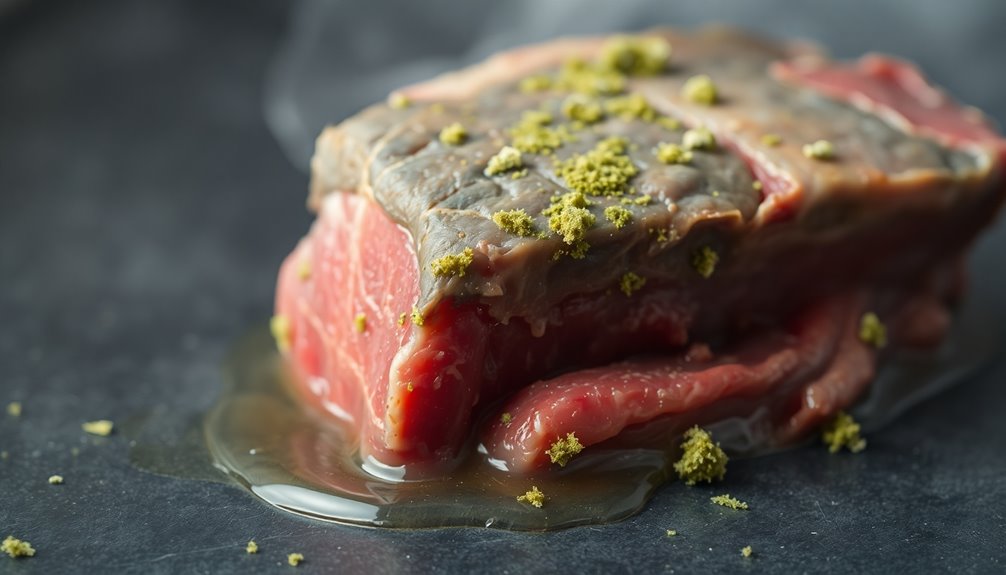
Spoiled beef's unpleasant smell comes from the breakdown of proteins and fats, which creates volatile compounds like amines and sulfur compounds. When beef spoils, it emits a strong, foul odor that may remind you of rotten eggs or ammonia. This odor signals the presence of spoilage bacteria that thrive during the putrefaction process. As these bacteria proliferate, they produce compounds like cadaverine and putrescine, further enhancing the unpleasant odor.
In contrast, fresh beef typically has a neutral scent, perhaps with a hint of metallic notes. If you detect any strong or sour odor, it's a clear indication of significant bacterial growth and spoilage. The specific smell of spoiled beef can vary based on the type and quantity of bacteria involved, as well as the environmental conditions during storage. Factors like temperature and humidity can accelerate spoilage, leading to a more pronounced odor. Understanding the source and composition of these smells can help you identify spoiled beef quickly, ensuring you avoid consuming anything unsafe. Remember, the smell of spoiled beef is a crucial indicator of its freshness and safety.

MOOKA Air Purifiers for Home Large Room up to 1076ft², H13 True HEPA Air Filter Cleaner, Odor Eliminator, Remove Smoke Dust Pollen Pet Dander, Night Light, B-D02L White
MOOKA B-D02L AIR PURIFIER FOR LARGE ROOM: With the high-efficiency filtration system, the air purifier covers an area...
As an affiliate, we earn on qualifying purchases.
Typical Scenarios or Environments
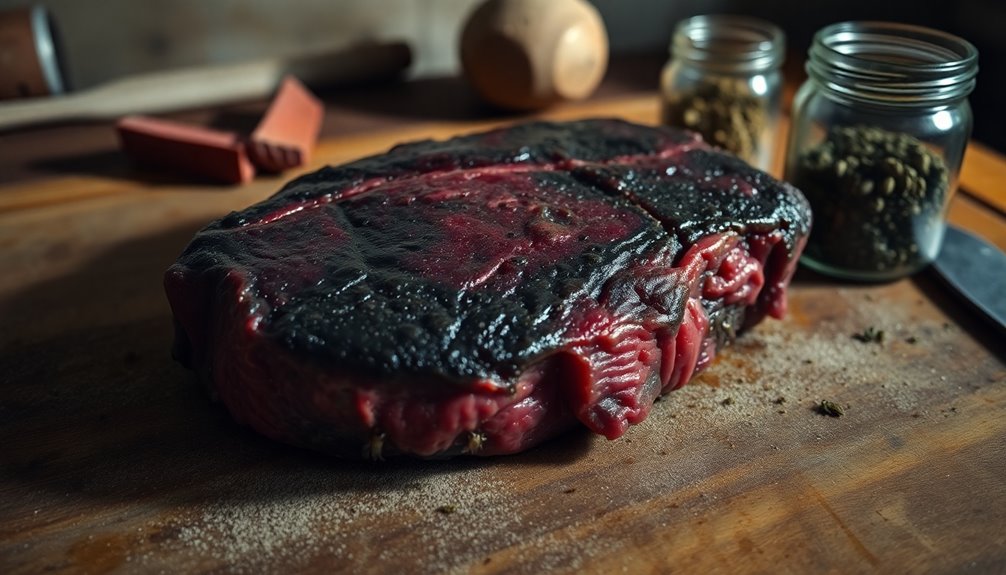
Improperly stored beef often reveals its degradation through a strong, sour odor reminiscent of spoiled milk. This smell indicates spoilage caused by the growth of spoilage bacteria. If you leave beef in environments with higher temperatures, the bacteria multiply rapidly, leading to a pronounced putrid odor that's hard to ignore.
When you open vacuum-sealed beef, you might notice a mild rotten egg smell. This odor should dissipate quickly. However, if it lingers or intensifies, it's a sign that the meat has gone bad. A tangy or ammonia-like smell is another red flag. These odors suggest significant spoilage, making it crucial to discard the meat immediately for your safety.
Always check the storage conditions of your beef to prevent spoilage. Keeping it in the fridge at the right temperature can help minimize the risk. If you ever encounter a rancid smell or any unsettling odors, trust your instincts. Spoiled beef isn't just unpleasant; it can also pose serious health risks. In short, when it comes to beef, it's better to be safe than sorry—if in doubt, throw it out!
Emotional or Cultural Associations
Experiencing the smell of spoiled beef can trigger a visceral reaction, often rooted in deep-seated emotions like disgust and revulsion. This response isn't just personal; it's shaped by cultural narratives that link bad meat with waste and foodborne illness. In many communities, the scent of rancid beef acts as a powerful reminder of the importance of food safety practices, reinforcing the need to avoid health risks.
Culinary traditions around the world emphasize freshness, leading to strong emotional associations with the rejection of any meat that emits off-putting odors. When you catch a whiff of spoiled beef, it may evoke memories of past experiences and warnings shared within your community about the dangers of consuming tainted food. These narratives collectively shape your attitude towards meat consumption and preservation methods.
Moreover, community knowledge plays a vital role in educating individuals about the signs of spoiled meat. It's this shared understanding—rooted in cultural practices—that helps you navigate the complexities of food safety, ensuring that you remain vigilant in identifying freshness and avoiding the unpleasant consequences that come with spoiled beef.
Health or Safety Considerations
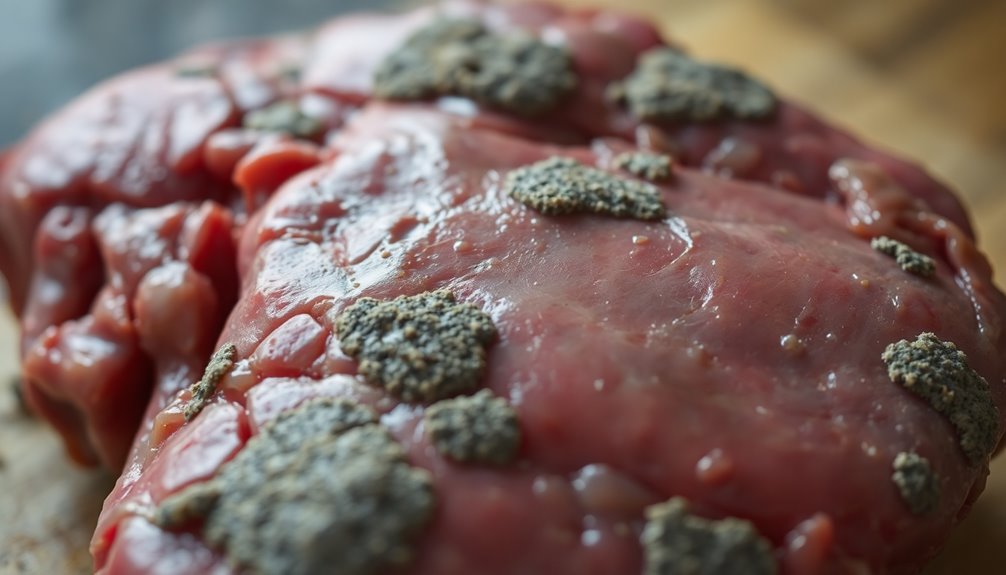
When beef starts to go bad, it can release a potent odor that signals potential health risks. The smell of spoiled beef often resembles sour or putrid scents, similar to rotten eggs or spoiled milk. This unpleasant odor indicates the presence of spoilage bacteria and harmful amines, like cadaverine and putrescine, which can pose serious health risks. Consuming spoiled beef can lead to foodborne illnesses, causing symptoms such as nausea, vomiting, and diarrhea that may occur within hours or a few days after ingestion.
To avoid these risks, proper handling and storage of beef are crucial. Always refrigerate raw meat within two hours of purchase to minimize bacterial growth. If you ever notice a bad smell from your beef, it's best to err on the side of caution. Even a faint unpleasant odor can indicate spoilage, so don't hesitate to discard it. It's better to be safe than sorry when it comes to your health. Remember, prioritizing food safety can help you avoid the dangers associated with consuming spoiled beef.
Final Thoughts
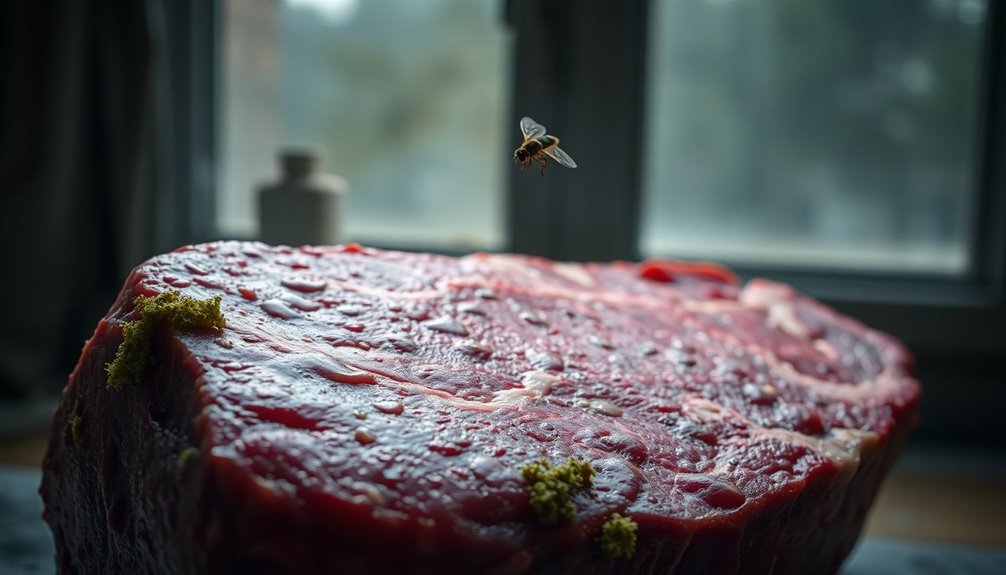
Understanding the signs of spoiled beef is essential for your safety and health. When you notice a bad smell coming from ground beef, it's a clear indication that it's time to take action. Fresh beef should have a neutral scent; if it smells bad or has an unpleasant odor, you should treat it with caution. The strong, off-putting odor of spoiled beef can resemble sour milk or ammonia, signaling the presence of harmful bacteria.
These bacteria can lead to foodborne illness, putting your health at risk. If you detect a noticeable smell from the beef, discard it immediately. Remember, trusting your senses is key—an unpleasant odor is a major red flag. Don't take chances with your food safety; spoiled beef isn't safe for consumption in any form.
Frequently Asked Questions
Is It Okay to Eat Beef That Smells a Little?
If you notice that beef smells a little off, it's best not to take any chances. A faint odor can indicate spoilage, and consuming questionable meat can lead to foodborne illnesses. Always trust your instincts; if the smell becomes stronger or unpleasant, it's time to toss it. Also, check the color and texture. When in doubt, you're better off discarding it to ensure your safety and health.
How Can You Tell if Beef Is Spoiled?
To tell if beef's spoiled, trust your senses. Check for any off-putting smells; if it smells sour or like rotten eggs, it's best to toss it. Look for changes in color, too—gray or green hues can signal spoilage. If the texture feels slimy or sticky, don't take chances. Always remember, when in doubt, throw it out. It's better to be safe than to risk foodborne illness.
What Does off Beef Smell Like?
When you encounter off beef, you'll notice a strong, unpleasant odor that can remind you of ammonia or rotten eggs. This pungent smell is a clear sign of spoilage. Fresh beef has a neutral, slightly metallic scent, while spoiled beef develops a sour or rancid aroma due to bacteria growth. If you catch a whiff of something distinctly different from the usual smell, it's best to toss it out to avoid health risks.
Is Beef Bad if It Smells Sweet?
If beef smells sweet, it's likely gone bad. You should trust your senses; a sweet odor often indicates spoilage from bacteria breaking down the meat. It's not just the smell to consider, though. Check the color and texture too. If you notice any unusual odors or changes, it's best to err on the side of caution and discard the beef. You don't want to risk foodborne illnesses by consuming spoiled meat.